Galaxy Watch 7 vs Apple Watch 10: Which Is Better in 2026?
Galaxy Watch 7 vs Apple Watch 10: the right choice depends first on your phone. Choose the Apple Watch Series 10 if you use an iPhone. Choose the Samsung Galaxy Watch7 if you use Android,…
We independently review everything we recommend. We may earn a commission when you buy through our links.
Learn more ›
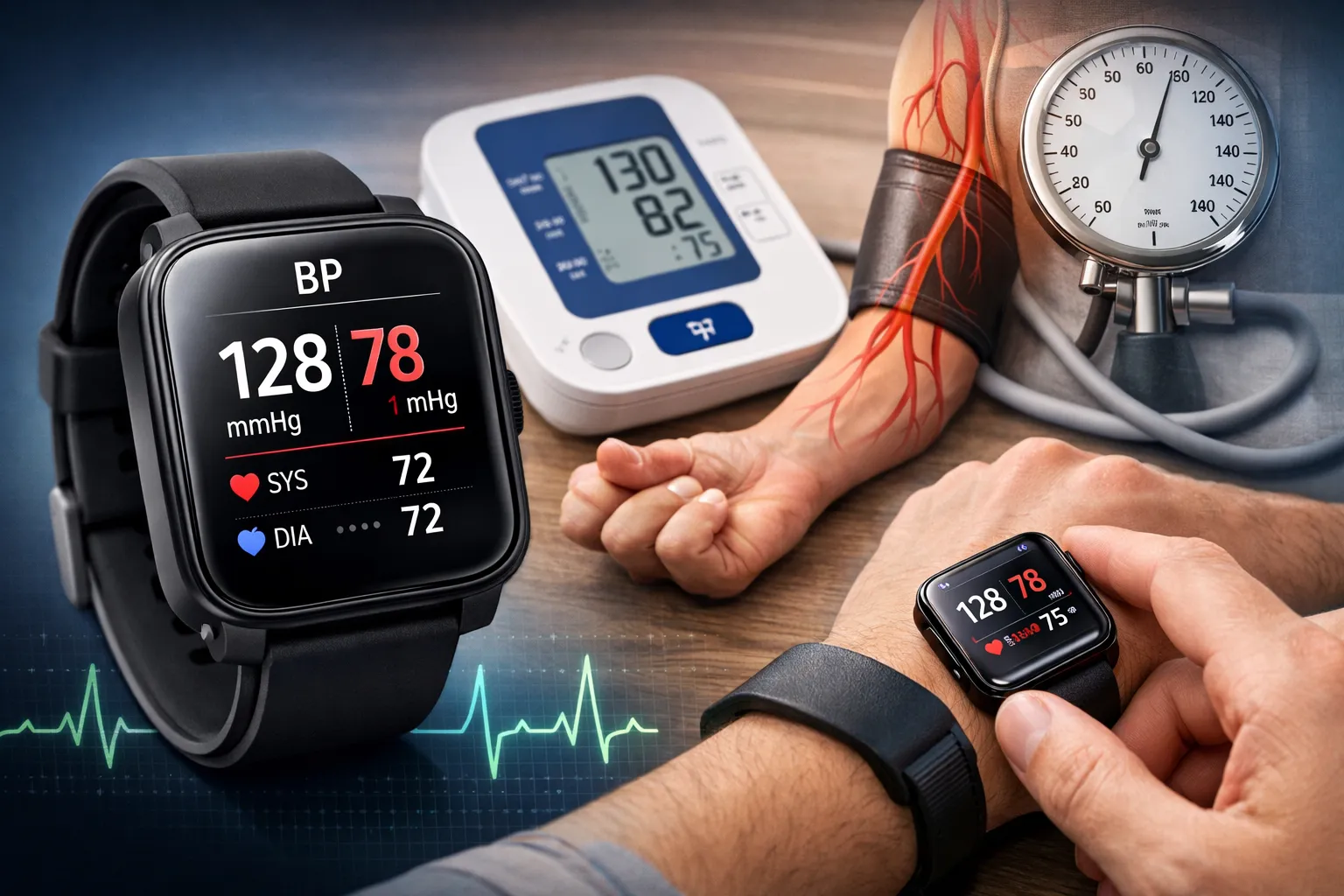
Some smartwatches can measure or estimate blood pressure, but the method matters.
Cuff-based blood pressure watches use a small inflatable cuff and work more like a traditional monitor. Sensor-based smartwatches use optical sensors, heart data, and software algorithms to estimate blood pressure trends from your wrist.
That difference is important. A smartwatch may help you notice patterns, track wellness trends, or remember to check your numbers more often. But most smartwatches should not replace a validated upper-arm blood pressure cuff, especially if you are managing hypertension, taking medication, or making health decisions based on your readings.
This guide explains how smartwatch blood pressure tracking works, how accurate it can be, what the Galaxy Watch does, and what to check before buying a blood pressure watch.
Yes, some smartwatches can measure or estimate blood pressure, but they do not all work the same way.
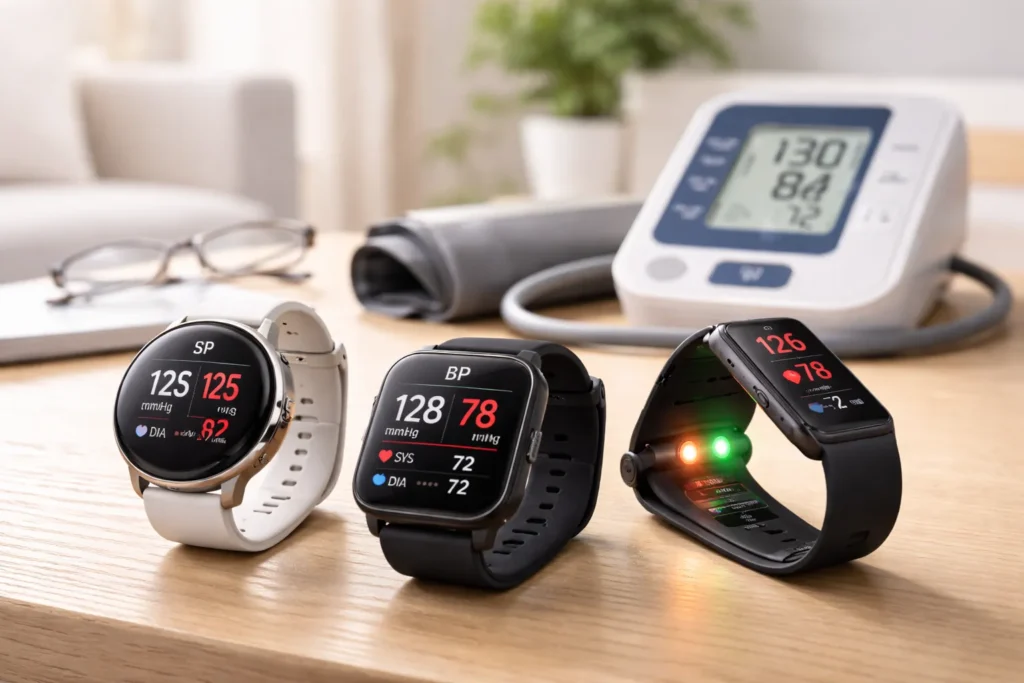
The most accurate blood pressure watches usually use a cuff-based design. These devices have a small inflatable cuff built into the watch band or wrist strap. They take readings in a way that is closer to a traditional blood pressure monitor.
Many popular consumer smartwatches use sensor-based estimation instead. These watches may use optical heart sensors, pulse wave analysis, and algorithms to estimate blood pressure. Some models require calibration with a traditional upper-arm cuff before they can provide readings.
For everyday wellness tracking, a smartwatch can be useful. For diagnosing high blood pressure, adjusting medication, or replacing medical equipment, a validated cuff is still the safer choice for home monitoring.
Not every blood pressure smartwatch works the same way. Before buying one, it helps to understand the two main categories.
Cuff-based blood pressure watches use pressure, similar to a traditional arm cuff. Instead of relying only on light sensors, they use an inflatable cuff built into the device or strap.
These watches may provide more direct blood pressure readings because they use a pressure-based method. They are usually better suited for people who want a wrist-based device that acts more like a real blood pressure monitor.
The tradeoff is comfort and design. Cuff-based watches may be bulkier than regular smartwatches, and they may not offer the same app support, fitness features, or sleek design as mainstream models.
Before buying one, check whether the device has clinical validation, regulatory clearance, and clear instructions from the manufacturer.
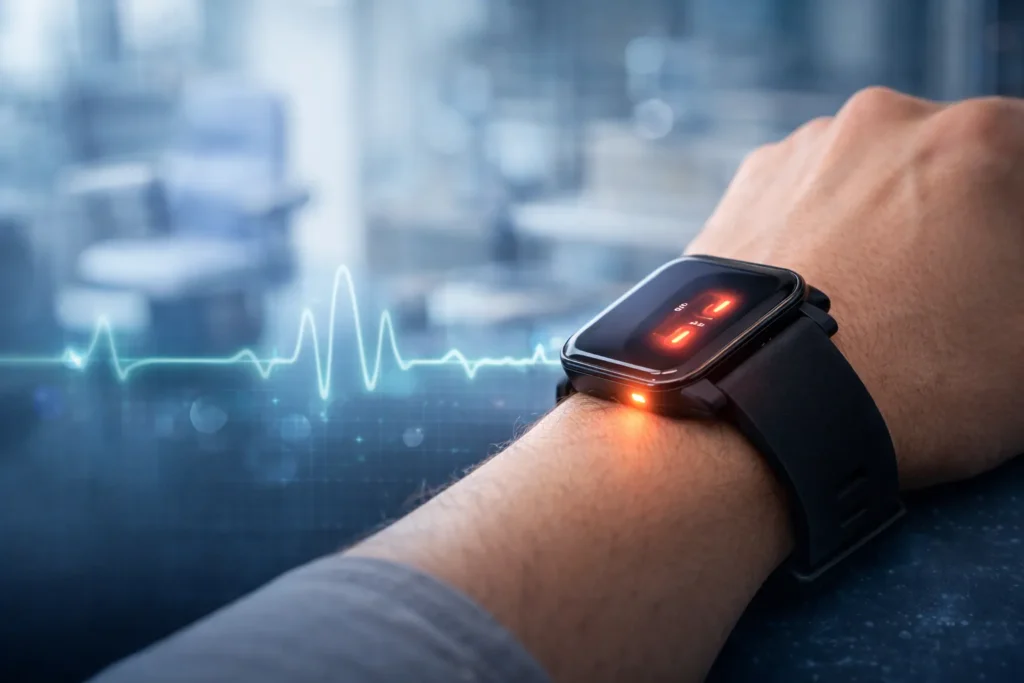
Sensor-based smartwatches use optical sensors and software to estimate blood pressure. These are the types of watches many people think of when they ask whether a smartwatch can measure blood pressure.
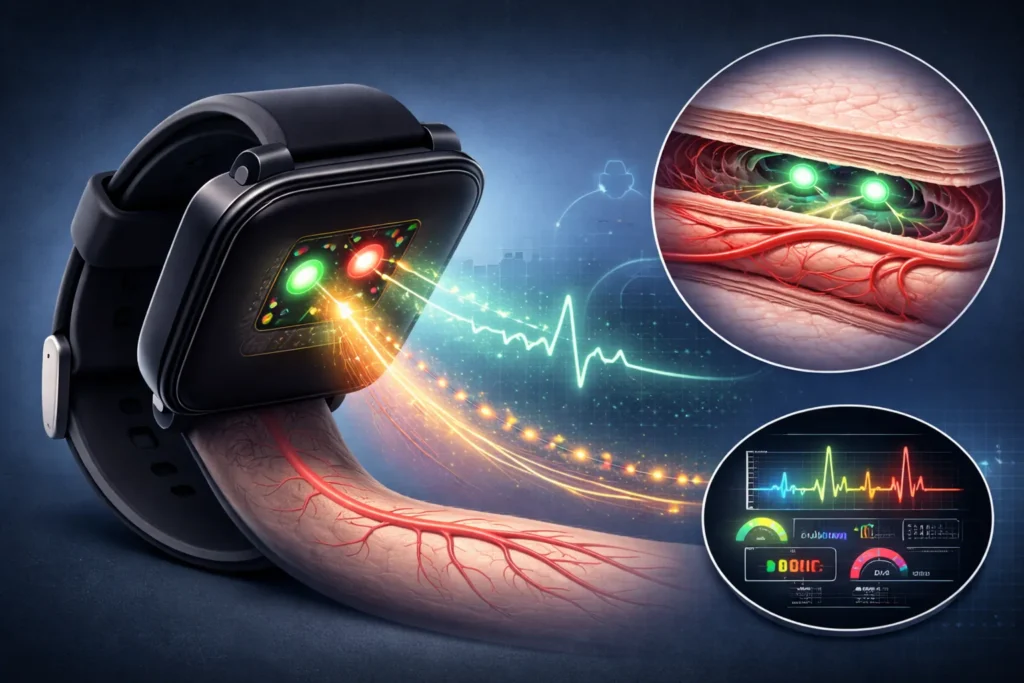
Instead of inflating like a cuff, the watch shines light into the skin and analyzes blood flow patterns. The device may combine this data with heart rate, pulse wave timing, motion data, and algorithms to estimate a blood pressure reading.
This type of tracking can be convenient, but it has more limitations. Readings may be affected by wrist position, movement, skin tone, sensor quality, temperature, and how tightly the watch fits.
That is why many sensor-based watches are better for tracking trends than replacing a medical-grade blood pressure monitor.
Most sensor-based smartwatches rely on optical heart sensors. These sensors are often called PPG sensors, which stands for photoplethysmography.
In simple terms, the watch shines light into your skin and tracks changes in blood volume beneath the surface. The device then uses software to estimate how blood is moving through your body.
Some smartwatches also look at pulse wave timing. This means they try to analyze how quickly a pulse wave travels through your blood vessels. The watch may combine that information with heart rate and other health data to estimate blood pressure.
This is very different from a traditional cuff. A cuff physically squeezes the artery and measures pressure changes. A sensor-based smartwatch is making an estimate based on indirect signals.
That does not mean the feature is useless. It means the readings need to be understood correctly.
A smartwatch may help you notice changes over time. It should not be treated as a final medical reading unless the device is specifically validated and approved for that use. If you are comparing fitness-first wearable platforms, our Garmin vs Fitbit guide can help explain how different brands handle health and wellness tracking.
Some Samsung Galaxy Watch models support blood pressure monitoring through the Samsung Health Monitor app in supported regions.
The important detail is calibration. Compatible Galaxy Watch models may require calibration with a traditional upper-arm blood pressure cuff before the watch can estimate blood pressure from the wrist. Samsung’s own instructions explain that users need an upper-arm cuff-based monitor to complete calibration.
Availability can also vary by country, watch model, phone compatibility, software version, and app support.
So, if you are buying a Galaxy Watch mainly for blood pressure tracking, check three things first:
Is blood pressure monitoring supported in your country?
Is your Galaxy Watch model compatible?
Do you have the required upper-arm cuff for calibration?
The Galaxy Watch can be useful for people who want wrist-based health tracking, but it should still be treated as a wellness and trend-tracking tool unless your doctor tells you otherwise.
Smartwatch blood pressure accuracy depends on the device type and how it is used. Cuff-based watches may offer more traditional readings because they use pressure. Sensor-based smartwatches rely on optical data and algorithms, so they are more sensitive to outside factors.
This is why two people can use the same smartwatch and get different levels of reliability. Even the same person may see different results if the watch is loose, the wrist is bent, or the calibration is outdated.
For general wellness, smartwatch readings may help you watch trends. For medical decisions, a validated upper-arm cuff is still the better tool.
A blood pressure watch can be useful when you want convenient health awareness throughout the day.
A smartwatch can also be helpful for people who already care about fitness tracking, sleep data, heart rate, and daily activity.
If you are comparing health-focused wearable options, you may also want to compare the best smartwatch for Android for health tracking, fitness features, notifications, and everyday smartwatch tools.
Use a validated upper-arm blood pressure cuff if you need readings for medical decisions.
A smartwatch can support awareness, but it should not replace professional medical advice. If your smartwatch gives unusual readings or alerts, confirm them with a proper cuff and contact a healthcare professional when needed. For daily wearable concerns, read our guide on whether wearing a smartwatch is bad for your health.
Before choosing a blood pressure watch, look beyond the product photos and marketing claims.
Find out whether the watch uses a cuff-based system or sensor-based estimation.
A cuff-based watch may be better if your main goal is blood pressure measurement. A sensor-based smartwatch may be better if you want broader features like fitness tracking, notifications, sleep tracking, and app support.
Some smartwatches require calibration with an upper-arm cuff. If you do not calibrate properly, the readings may become less useful.
Check how often calibration is required and whether the app gives reminders.
Some blood pressure features only work with certain phones, apps, regions, or watch models.
Before buying, confirm that the feature works where you live and with the phone you use.
Be cautious with products that promise “medical-grade” results without clear validation or approval. If a device claims to diagnose hypertension or replace a doctor-recommended monitor, check official documentation first.
Blood pressure tracking is only useful if you actually wear the device. Look for a watch that is comfortable, easy to use, and has enough battery life for your routine. If you are still deciding whether the upgrade makes sense, our guide on whether a smartwatch is worth it can help.
If you are also considering LTE or cellular features, read our guide on whether a smartwatch needs a data plan before paying extra for a cellular model.
A smartwatch and a traditional cuff can both be useful, but they serve different purposes.
A traditional upper-arm cuff is better for accuracy, medical records, and doctor-recommended home monitoring.
A smartwatch is better for convenience, wellness trends, and quick access to health data throughout the day.
The best setup for many people is not smartwatch or cuff. It is smartwatch plus cuff. The cuff gives you more reliable readings, while the smartwatch helps you stay aware of patterns.
Health authorities and medical experts generally recommend caution with wearable blood pressure readings.
The key message is simple: wearable devices may help with awareness, but unauthorized or unvalidated devices should not be used as a replacement for proper blood pressure equipment.
The U.S. Food and Drug Administration has warned consumers about unauthorized blood pressure devices, including wearable software features that claim to measure blood pressure without proper review.
Medical experts also stress that smartwatches cannot diagnose hypertension by themselves. If a wearable suggests unusual blood pressure patterns, the next step is to confirm the reading with validated equipment and speak with a healthcare professional.
So, can a smartwatch measure blood pressure?
Yes, but the answer depends on the type of smartwatch. Cuff-based watches can work more like traditional monitors, while sensor-based smartwatches usually estimate blood pressure trends using wrist sensors and algorithms.
For everyday wellness, a smartwatch can be helpful. For diagnosing or managing high blood pressure, a validated upper-arm cuff is still the more reliable choice.
If you want a wearable mainly for health tracking, compare our guide to the best smartwatch for Android before choosing a model.
Some smartwatches can measure or estimate blood pressure, but accuracy depends heavily on the device and how it takes the reading. Watches with an inflatable cuff are usually more reliable than cuffless watches that estimate blood pressure from sensors and algorithms.
Smartwatch blood pressure readings can vary, especially on cuffless models that estimate numbers instead of using a physical cuff. They may be useful for tracking general trends, but they should not replace a clinically validated blood pressure monitor if you are managing hypertension or making health decisions.
The process depends on the smartwatch. Some watches use a small inflatable cuff built into the band, while others require calibration with a traditional arm cuff before estimating blood pressure through the watch’s sensors.
The best blood pressure smartwatch is usually one that uses a validated measurement method and clearly explains how readings are taken. Before buying, check whether the watch uses an inflatable cuff, requires calibration, supports your phone, and has credible testing or medical clearance for your region.
Expert buying advice, practical recommendations, and smart product picks — delivered straight to your inbox daily.
By signing up, you agree to the terms of service and privacy.
Get notified about new articles