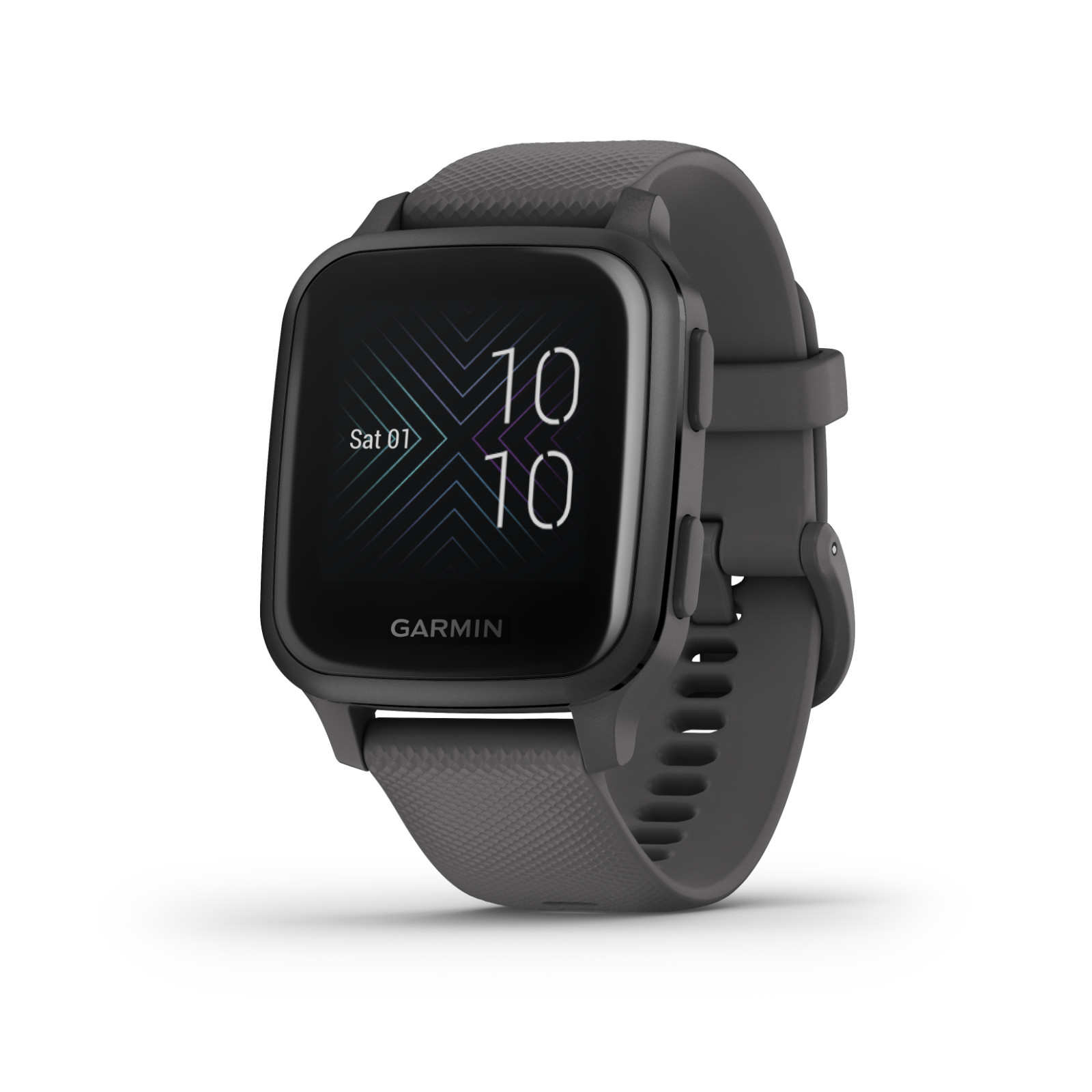
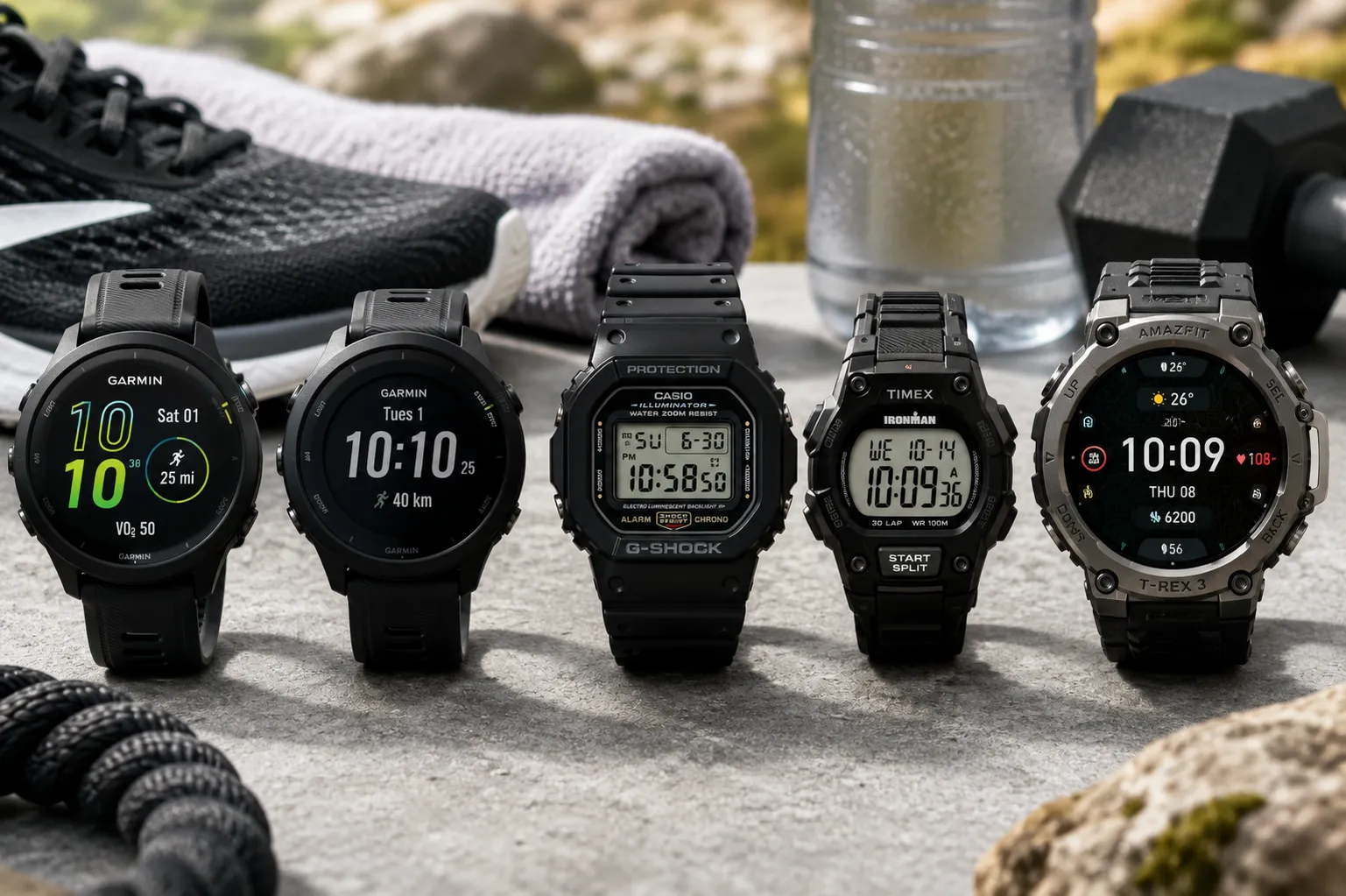
The best mens sport watches depend on whether you want to record training or simply time it. Our research-based picks are the COROS PACE 4 for running and triathlon, Garmin Forerunner 165 for an affordable route into Garmin training tools, Timex Ironman Classic 30 for lap timing, Casio G-Shock DW5600WW-7 for rugged everyday wear, Amazfit T-Rex 3 for outdoor maps, and Garmin Instinct 3 Solar when solar charging matters more than a color screen.
A stopwatch can be all you need for gym rests and track intervals. Choose a GPS watch when pace, distance, routes and a training history will change how you exercise. This guide covers practical workout and daily-use watches, rather than luxury watches with a sporty appearance.
Quick picks: choose by the job
- COROS PACE 4 — for runners and triathletes who want focused training features in a light watch.
- Garmin Forerunner 165 — for runners who value Garmin Coach and suggested workouts, especially at a discount.
- Timex Ironman Classic 30 — for inexpensive lap memory and straightforward timing without an app.
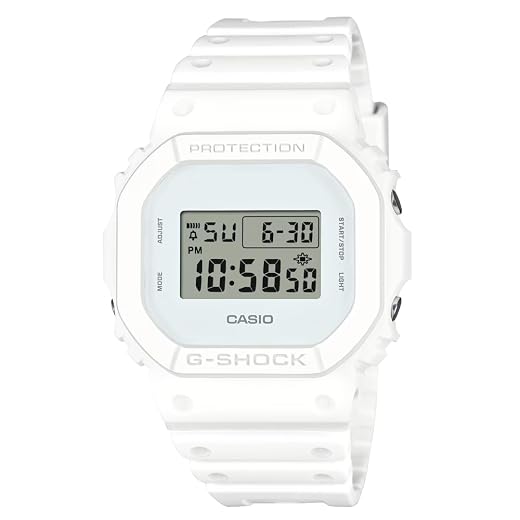
- Casio G-Shock DW5600WW-7 — for durable daily timekeeping and occasional workout timing.
- Amazfit T-Rex 3 — for a large screen and offline maps on outdoor outings.
- Garmin Instinct 3 Solar — for solar charging, a flashlight and the longest battery life in this guide.




Compare the six watches
| Watch | Best fit | Tracking or timing | Main trade-off |
|---|---|---|---|
| COROS PACE 4 | Running and triathlon | Dual-frequency GPS; breadcrumb routes | No full maps |
| Garmin Forerunner 165 | Guided running training | GPS, suggested workouts and recovery guidance | Older model; compare the discounted price |
| Timex Ironman Classic 30 | Track laps and gym intervals | 30-lap memory and countdown timer | No GPS or heart-rate tracking |
| G-Shock DW5600WW-7 | Rugged everyday wear | Stopwatch and countdown timer | No connected training record |
| Amazfit T-Rex 3 | Outdoor routes | Dual-band GPS and offline maps | Large 48.5 mm case |
| Garmin Instinct 3 Solar | Long trips away from a charger | Multi-band GPS with solar charging | Monochrome display; priciest here |
How we chose these mens sport watches
We reviewed current sports-watch buying guides, checked manufacturer documentation and compared available merchant listings on September 2, 2026. These are editorial recommendations based on research, not hands-on testing. We have not independently measured GPS accuracy, battery life or long-term durability.
The shortlist covers six distinct needs. We prioritized useful workout controls, fit, navigation, charging demands and value over the number of advertised sport modes. We also checked model and strap variants: the PACE 4 below has a silicone band, the Timex is the 41 mm T5K822, and the Amazfit is the standard T-Rex 3. Product-card prices can change; confirm the selected variant, seller, condition and return policy at checkout.
COROS PACE 4: for running and triathlon
The PACE 4 is our first choice here when training is the main reason to buy. Its combination of dual-frequency GPS, structured workout tools and triathlon support gives it a clearer sporting role than a basic everyday timer. The 1.2-inch AMOLED screen and light build also make it a reasonable candidate for wearing between sessions.
COROS lists a weight of 40 g with the silicone band supplied in this listing; the often-advertised 32 g figure is for the nylon band. Claimed battery life reaches 19 days of daily use or 41 hours of GPS recording under the manufacturer’s conditions. These are separate use scenarios, not a promise of 19 days while recording GPS continuously. See the official PACE 4 specifications.
The limitation: its route guidance is breadcrumb navigation, not a full street or topographic map. You can follow a prepared route, but readers who want surrounding map detail should consider the T-Rex 3. COROS explains the navigation tools in its PACE 4 setup guide.
Choose it if: running or multisport training is a regular habit.
Skip it if: you only need a timer, or full offline maps are essential.
Lightweight GPS training watch with an AMOLED display and breadcrumb navigation. This listing includes the black silicone band.
- COROS lists 40 g with the silicone band
- Focused training and multisport features
- The lightest option here for regular running
- Route guidance is breadcrumb navigation, not full offline maps
- Less everyday-smartwatch polish than rivals
Garmin Forerunner 165: for Garmin training at a lower price
The Forerunner 165 remains useful when its discounted price makes sense. Garmin Coach, daily suggested workouts and recovery guidance can give a recreational runner more direction than a watch that only records a session. Its touchscreen plus physical buttons also provides a choice of controls.
Garmin specifies up to 11 days in smartwatch mode or 19 hours in GPS mode. The model linked here is the standard Forerunner 165, not the Music version with onboard music storage. Garmin’s Forerunner 165 series announcement explains those distinctions and training features.
The limitation: this is an older model. Garmin has since introduced the Forerunner 70 and 170. Compare their current prices before buying; the 165’s case is strongest at a meaningful discount, not simply because it carries the Garmin name.
Choose it if: you want accessible running guidance or already use Garmin Connect.
Skip it if: a newer Garmin costs about the same. If you are choosing an ecosystem, our Garmin vs Fitbit guide explains the different approaches to fitness tracking.
GPS running watch with Garmin Coach, suggested workouts and recovery guidance. Standard model; onboard music storage requires the separate Music version.
- Garmin specifies up to 11 days in smartwatch mode, or 19 hours with GPS
- Garmin Coach and suggested workouts
- Accessible entry into the Garmin ecosystem
- An older model — newer Garmins may cost about the same
- Fewer features than the current Forerunner line
Timex Ironman Classic 30: for simple lap timing
The Ironman Classic 30 is the practical option when you already know your workout and want to time it. Its 30-lap memory helps you review splits after a track session, while the countdown timer suits repeat efforts or gym rests. You do not need to create an account or manage notifications to use those functions.
The listing below is the black T5K822 with a 41 mm resin case. Other Classic 30 listings use different case sizes, so the family name alone is not enough to identify the watch. Timex’s Classic 30 product documentation describes the family’s timing controls and INDIGLO lighting; that linked manufacturer variant is 38 mm, rather than the 41 mm version in our card.
The limitation: lap timing is manual. It will not measure your route, record heart rate or produce a connected training history. The Ironman name does not mean it offers the automated multisport tracking of a GPS triathlon watch.
Choose it if: you value simple controls and lap recall more than workout data. Skip it if: you want automatic pace and distance. Our guide to what a smartwatch does helps explain what you gain by moving to a connected watch.
Digital sports watch with 30-lap memory, countdown timer and INDIGLO lighting. No GPS or heart-rate tracking.
- Simple controls and lap recall
- 41 mm resin case, light on the wrist
- The cheapest pick here
- Lap timing is manual
- Does not measure distance, pace or heart rate
Casio G-Shock DW5600WW-7: for rugged everyday wear
Choose this G-Shock when a dependable everyday timer matters more than training analytics. Its shock-resistant construction, digital display, stopwatch and countdown timer suit a watch you can use at work and take to a casual workout. There is no companion app to maintain.
Our selected listing is the white DW5600WW-7, not a generic black DW5600 or a solar-powered G-Shock. Casio identifies the exact model in its DW5600WW-7 product page. Pick the white finish because you like it; if you want black, verify the exact replacement model and its features before ordering.
The limitation: it cannot record GPS routes or heart rate, and it is not a substitute for the Timex’s dedicated lap-memory workflow. Its appeal is straightforward timing and durability rather than a richer exercise record.
Choose it if: you want a rugged digital watch for everyday use with occasional timing duties.
Skip it if: reviewing workout progress is your main goal.
Shock-resistant digital watch with a stopwatch and countdown timer. White resin variant; no GPS, heart-rate sensor or app connection.
- Dependable everyday timekeeping
- Genuinely rugged for daily knocks
- No charging routine to maintain
- Cannot record GPS routes or heart rate
- No training history to review
Amazfit T-Rex 3: for offline maps and a large screen
The standard T-Rex 3 is the outdoor-oriented choice in this shortlist. Dual-band GPS and downloadable offline maps give it a useful distinction from watches that show only a route line. Its 1.5-inch AMOLED screen provides more room for map detail and workout information.
Amazfit lists a 48.5 mm case and up to 27 days of typical use, versus 42 hours in its accurate GPS mode. Brightness, navigation, settings and recording time affect real battery life. The official T-Rex 3 specifications explain the different battery scenarios and map features. Download the area you need before heading out.
The limitation: this is a large watch. Check its fit rather than assuming a bigger “men’s” watch is automatically better. The Onyx model below is the standard T-Rex 3; do not assume it includes every feature advertised for the separate T-Rex 3 Pro.
Choose it if: offline map context and a roomy display matter more than a discreet case.
Skip it if: you want the lightest option for frequent runs or a watch that fits easily beneath a cuff.
Standard T-Rex 3 with dual-band GPS and downloadable offline maps. Large 48.5 mm case; this is not the T-Rex 3 Pro.
- Amazfit lists up to 27 days of typical use
- Offline maps on a large 48.5 mm case
- Rugged outdoor styling
- Large watch — check the fit rather than the spec
- Heavier than a dedicated running watch
Garmin Instinct 3 Solar: for solar charging and long battery life
The Instinct 3 Solar is the pick when charging the watch is the part you want to stop thinking about. Garmin builds a solar lens into the face of the 45 mm case and quotes unlimited battery in smartwatch mode on the strength of it, with the assumption printed alongside the claim: all-day wear plus around three hours a day outside in 50,000 lux conditions. Without that sunlight, the quoted figure is 28 days.
How you use it changes those numbers a great deal. Garmin’s battery life tables for the Instinct 3 Solar list up to 40 hours of GPS-only recording, rising to 130 hours with solar, and up to 65 days in battery saver mode. The listing below is the black 45 mm model, part 010-02934-00, at 52 g on a 22 mm band, with a fiber-reinforced polymer case, a metal-reinforced bezel, a 10 ATM water rating and MIL-STD-810 thermal and shock testing.
Navigation is the other reason to look at it. Multi-band GPS with Garmin’s SatIQ satellite switching is paired with a three-axis compass and a barometric altimeter, and there is a built-in LED flashlight with variable intensity and a strobe mode that earns its place on dark early starts.
The limitation: the display. Instinct 3 ships in two versions and this is the solar one, which uses a 0.9-inch monochrome memory-in-pixel panel at 176 × 176 rather than the AMOLED screen on the non-solar models. It stays readable in direct sun and costs very little battery, but it will not show map detail the way the T-Rex 3 does. It is also the most expensive watch in this guide.
Choose it if: you spend real time outdoors and want to stop planning around a charger.
Skip it if: you want a color screen, or the hours you will actually log do not justify the price.
Solar-charging 45 mm Garmin with multi-band GPS, a barometric altimeter and a built-in LED flashlight. Monochrome MIP display, not AMOLED.
- Garmin quotes unlimited smartwatch-mode battery with daily sun
- Multi-band GPS, barometric altimeter and 3-axis compass
- Built-in LED flashlight with a strobe mode
- 10 ATM water rating and MIL-STD-810 testing
- Monochrome memory-in-pixel display, not the AMOLED version
- The most expensive watch in this guide
How to choose a sport watch you will actually use
Start with timing versus tracking
For known-distance track laps, a stopwatch and lap memory may answer the whole question. For runs on changing routes, built-in GPS lets a watch record distance and pace without relying on a phone’s GPS. If you are uncertain whether the extra data will be useful, consider whether a smartwatch is worth it for your routine before paying for more features.
Check the fit and controls
Case diameter is only a starting point. Check strap range, thickness and whether the case sits within the width of your wrist. A watch that feels acceptable for a short workout may be awkward under clothing or during sleep. Choose by your wrist and activities; these watches are not restricted to one gender. Look for controls you can operate confidently while moving.
Compare battery modes fairly
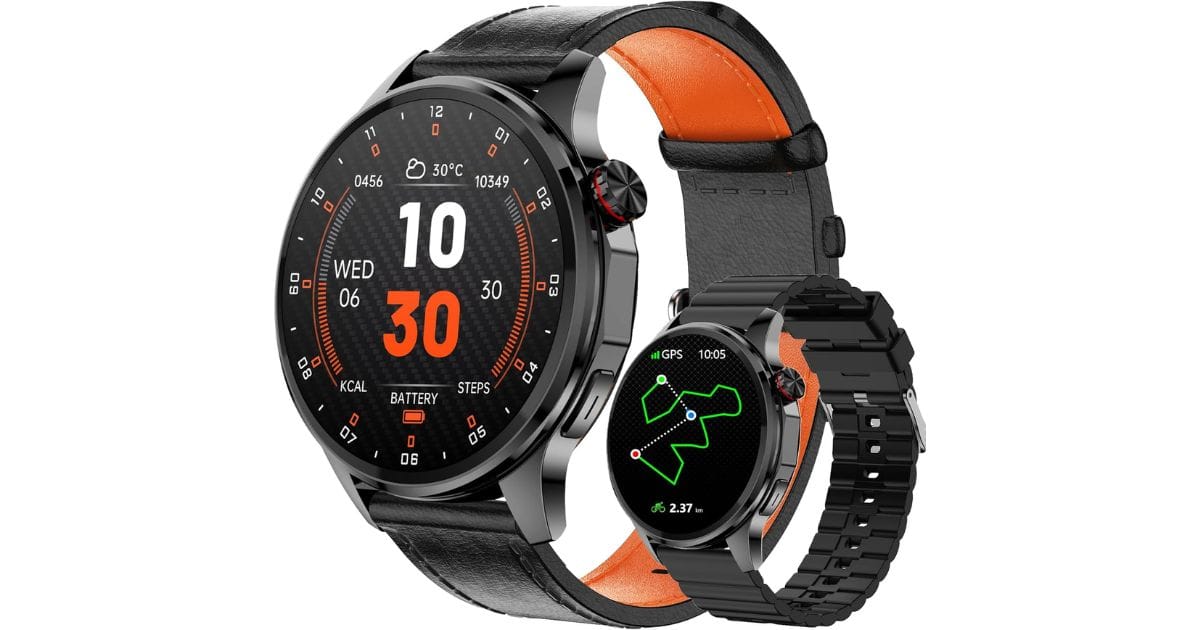
Daily-use battery figures include much less GPS recording than a long race or hike. Compare the GPS mode you intend to use, leave a reserve for delays, and treat manufacturer maxima as planning inputs rather than guarantees. A replaceable-battery digital timer avoids a routine charging schedule, but it also gives up the sensors and navigation of a connected watch.
Separate GPS from phone service
Built-in GPS does not mean a watch has mobile service. Recording a route, syncing it to an app and making a phone-free call are different capabilities. Check setup and app compatibility before purchase, and read whether a smartwatch needs a data plan if cellular service is part of your decision.
Read water-resistance instructions for the exact model
Do not treat “waterproof” as an unlimited guarantee. Use the manufacturer’s guidance for the activity you plan to do, including swimming, diving and button operation in water. A seller’s broad water-resistant label is not enough to establish suitability for every water sport.
Frequently Asked Questions
Which mens sport watch is best for everyday use?
For simple daily timekeeping and occasional workout timing, the G-Shock is our rugged pick. Choose the Timex if lap memory matters more, or the Garmin if you want running guidance and a connected activity record. Your preferred fit and functions matter more than a single overall winner.
Do I need GPS for the gym or track?
Not necessarily. A stopwatch or countdown timer can handle gym rests and intervals on a measured track. GPS becomes more useful when you want pace, distance and a record of outdoor routes without carrying your phone for its location data.
Are digital sport watches better than analog watches for training?
Digital watches generally make elapsed time, lap splits and countdowns easier to read directly. An analog chronograph can still time an activity, but choose it for the way you want to use it rather than assuming a sporty appearance includes training features.
Can these GPS watches replace my phone?
They can record supported workouts using their own GPS, but that does not make them full phone replacements. Companion apps handle setup and syncing, while communications features depend on the model and a connection. Check specific requirements before planning to leave your phone behind.
Does breadcrumb navigation include full offline maps?
No. Breadcrumb guidance follows a route line; full maps add surrounding geographic detail. In this shortlist, the PACE 4 provides breadcrumb navigation and the T-Rex 3 provides downloadable offline maps. Choose the type of guidance you need before comparing battery claims.
Final verdict
Start with the COROS PACE 4 if training is a regular habit. At a listed 40 g with the silicone band it is the lightest watch here, and its multisport features are the most focused of the six — the trade is breadcrumb route guidance rather than full offline maps.
If you only ever need to time a set, the Timex Ironman Classic 30 does that for a fraction of the money. The G-Shock is the one to buy if you want to stop charging a watch, the Amazfit T-Rex 3 is the pick when offline maps and a big screen matter more than weight, and the Garmin Instinct 3 Solar is the one to choose if you want GPS and navigation without planning around a charger.
Choose the COROS PACE 4 if regular training drives the purchase. The Garmin Forerunner 165 is worth considering for its running guidance when the discount is compelling. For simpler needs, the Timex adds lap memory and the G-Shock emphasizes rugged daily timing. Choose the T-Rex 3 when maps justify a larger watch, or the Instinct 3 Solar when days away from a charger matter more than a color display. Paying for a feature only makes sense if you will use it.