

Best Android Smartwatch: 6 Picks
Your phone decides more than any spec. Here are six Android watches — Pixel, Galaxy, OnePlus and Garmin — matched to the buyer each one actually suits.
We independently review everything we recommend. We may earn a commission when you buy through our links.
Learn more ›
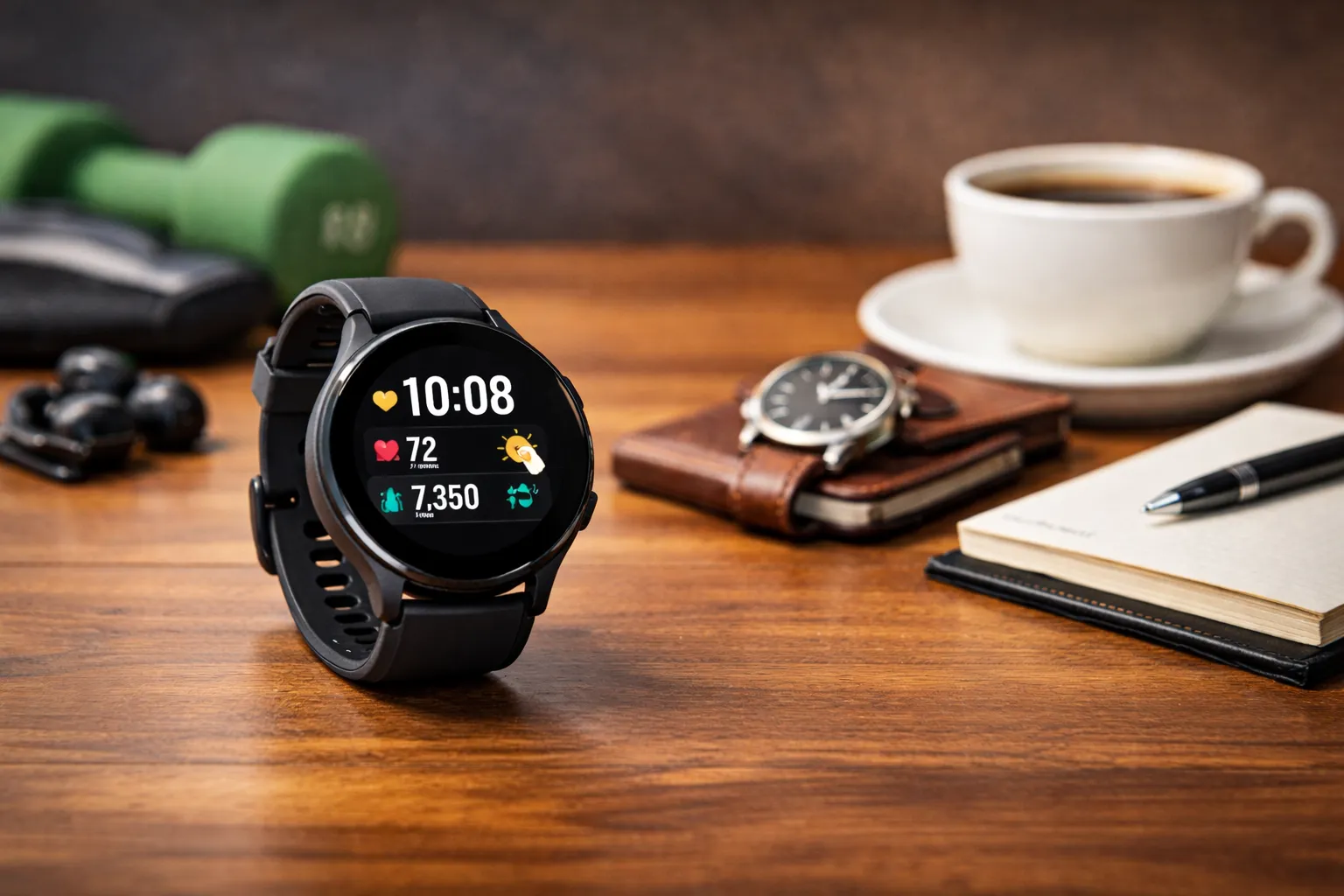
Smartwatches can be useful, but not everyone needs one. The right choice depends on your routine. If you care about fitness tracking, heart rate data, alerts, and quick phone access from your wrist, a smartwatch may be worth it.
For most people, a smartwatch is worth buying if it helps them stay active, check important alerts quickly, track health trends, or reduce how often they pull out their phone. But if you only want to tell time, avoid notifications, or do not care about health data, a regular watch or basic fitness tracker may make more sense.
If you are new to wearable technology, start with our guide on what a smartwatch does. You may also want to understand whether a smartwatch needs a data plan before choosing between Bluetooth and cellular models.
Yes, it makes sense if you want fitness tracking, sleep data, alerts, GPS, timers, and quick phone access. It is less useful if you want a simple watch, longer battery life, or fewer distractions.
The Apple Watch Series 9 is a strong pick for iPhone users. It connects smoothly with Apple devices. It also supports calls, notifications, workout tracking, heart rate monitoring, and Apple Pay.
This is the kind of smartwatch that feels useful throughout the day. You can glance at messages, track workouts, check timers, use apps, and monitor health trends without constantly reaching for your phone.
The downside is battery life. Most Apple Watch users still need to charge regularly. It is also not the cheapest option, especially compared with budget fitness trackers. But if you already use an iPhone, this is one of the easiest smartwatches to recommend.

A smartwatch becomes valuable when it solves small daily problems. It can help you move more, track workouts, monitor health patterns, manage notifications, and stay organized without opening your phone every few minutes.
Most smartwatches track steps, workouts, calories burned, sleep quality, and heart rate. These features help turn daily habits into measurable data, making it easier to monitor activity levels, fitness progress, recovery, and overall health trends over time.
Some models also include ECG apps, blood oxygen tracking, stress tools, and sleep coaching. These features can be helpful. Still, they should not replace medical devices or advice from a doctor. For more detail, read our guide on whether a smartwatch can measure blood pressure.
Some users also wonder whether wearable devices have any downsides. Read our guide on is wearing a smartwatch bad for your health for a deeper look at common concerns.
Smartwatches are useful for quick alerts. You can see calls, messages, calendar reminders, and app notifications without pulling out your phone. This is helpful at work, while driving, during workouts, or when your phone is not nearby.
Some smartwatches include emergency calling, fall detection, location sharing, and SOS features. These can be especially useful for runners, older adults, people who exercise alone, or anyone who wants quick access to help.
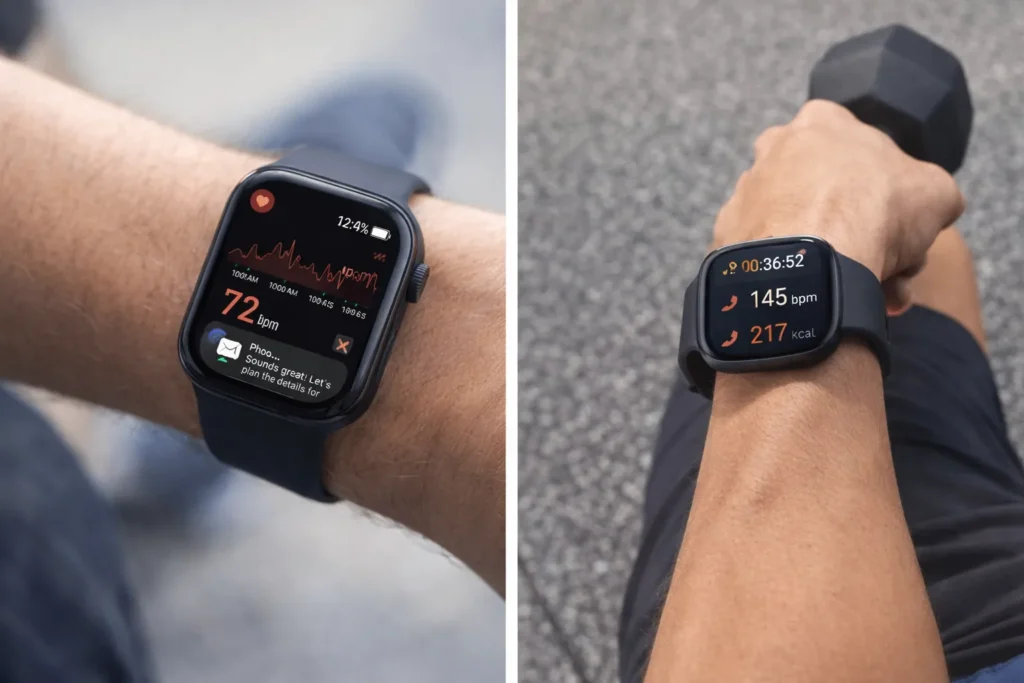
This watch is a good fit if you want more than a basic tracker. It supports apps, calls, messages, and smart features. It also tracks health and fitness. For more Android-focused recommendations, check out our guide to the best smartwatch for Android.
The main limitation is battery life compared with fitness-first brands like Garmin. If you want a smartwatch that feels modern and works well with Android, it is a strong pick. If you care more about multi-day battery life, Garmin may be better.

One of the biggest questions is whether you need a smartwatch or a simpler fitness tracker. A smartwatch is better for apps, notifications, calls, and overall phone integration. A fitness tracker is usually better for lower cost, lighter design, and longer battery life.
Here is a simple comparison to help you decide which wearable fits your routine better.
Bottom Line: Choose a smartwatch if you want smart features. Choose a fitness tracker if you mainly want steps, sleep, heart rate, and longer battery life.
The Garmin Venu 3 is better for fitness tracking, GPS, battery life, and recovery data. It is a strong choice for runners, gym users, cyclists, and active users. If you are comparing fitness-focused brands, see our Garmin vs Fitbit comparison.
Compared with many Apple and Samsung watches, Garmin usually does better with battery life. That matters if you do not want to charge your watch every night or if you want to track sleep consistently.
The tradeoff is that Garmin may not feel as smooth as an Apple Watch or Galaxy Watch for apps, texting, and phone-style convenience. But if fitness tracking is your main reason for buying, this is one of the stronger options.

Battery life is one of the biggest downsides of smartwatches. Some models need daily charging, while others can last several days or longer depending on settings and use.
If you want the most convenient smartwatch experience, shorter battery life may be acceptable. If charging every day annoys you, look closely at Garmin or simpler fitness trackers.
Before buying a smartwatch, think about how you will actually use it every day. The best option depends on your phone, fitness goals, battery needs, budget, and comfort.
If you use an iPhone, an Apple Watch usually makes the most sense. If you use Android, Samsung, Garmin, Fitbit, and other Wear OS watches may be better options.
You should also compare battery life, screen size, app support, GPS accuracy, health features, and water resistance. A cheaper smartwatch may be fine for basic step tracking and notifications. A higher-end model is better if you want more accurate fitness data, stronger health tools, and longer software support.
The Fitbit Sense 2 is built around health and wellness tracking. It focuses on stress management, sleep analysis, heart rate tracking, ECG support, SpO2, activity tracking, and GPS.
This model is a good fit for people who want a health-focused wearable without needing every advanced smartwatch feature. It is also useful for users who care about sleep trends, daily readiness, and wellness habits.
The main limitation is that it may not feel as powerful as Apple or Samsung for apps and phone integration. But for health tracking and simple daily wellness, it still makes sense.

The Apple Watch and Samsung Galaxy Watch are two of the most popular smartwatch options. The best choice mostly depends on your phone.
Both are strong smartwatches, but they serve different users.
Bottom Line: iPhone users should usually choose Apple Watch. Android users should look at Samsung, Garmin, Fitbit, or other Wear OS options.
Cheap smartwatches can be a good buy if you only want basic features like step counting, simple heart rate tracking, notifications, alarms, and casual workout modes. They are useful for testing whether you like wearing a smartwatch before spending more.
However, cheaper models may have weaker accuracy, less polished apps, shorter software support, and fewer advanced health features. They are usually better for casual use than serious fitness tracking or long-term reliability.
If fitness is one of your main goals, a smartwatch can be one of the most useful wearable devices you own. Most modern smartwatches track steps, workouts, heart rate, calories burned, GPS routes, sleep quality, and recovery metrics. This information helps users monitor progress and stay consistent with exercise routines.
For runners, cyclists, gym users, and people trying to lose weight, a smartwatch often provides more useful data than a traditional watch. Fitness-focused brands such as Garmin, Fitbit, Apple, and Samsung continue to expand health and training features every year.
Many runners choose smartwatches because they provide GPS tracking, pace monitoring, distance tracking, heart rate data, and training insights. Models from Garmin are especially popular among runners because of their long battery life and advanced workout metrics. If running is a major part of your fitness routine, a smartwatch can help track progress more accurately than a smartphone alone.
A smartwatch is not worth it for everyone. Some people buy one, wear it for a few weeks, then stop using it because it does not fit their habits.
Traditional watches are better for simplicity, style, and long battery life. Smartwatches are better for health tracking, digital convenience, notifications, and workout features.
A traditional watch can last years with minimal maintenance. A smartwatch depends on charging, software updates, battery health, and phone compatibility. That makes smartwatches more useful but also less timeless.
For many people, a smartwatch is worth it because it combines health tracking, fitness tools, notifications, productivity features, and safety options in one wearable device. It can help you stay active, monitor trends, and manage daily tasks with less phone checking.
But the value depends on your lifestyle. Fitness enthusiasts, busy professionals, tech-focused users, and people who want health insights will usually get the most from a smartwatch. Users who prefer simplicity, fewer alerts, or long battery life may be better with a traditional watch or basic fitness tracker.
To compare official smartwatch features and current models, you can review the official Apple Watch page, Samsung Galaxy Watch page, Garmin smartwatch lineup, and Fitbit smartwatch collection.
Yes, smartwatches can be useful if you want quick notifications, fitness tracking, sleep tracking, contactless payments, reminders, and basic health insights from your wrist. They are most useful for people who want convenience without checking their phone all day.
The biggest negatives are battery charging, notification distractions, cost, comfort, and limited lifespan compared with a regular watch. Some health features can also be helpful for trends, but they are not always perfect and should not replace medical care.
A smartwatch can be worth it for health tracking if you want to monitor steps, heart rate, sleep, workouts, stress, and daily activity trends. It is best used as a helpful wellness tool, not as a medical device or a replacement for a doctor.
A smartwatch may not be worth it if you dislike charging devices, prefer traditional watches, ignore phone notifications, or do not care about fitness and health tracking. In that case, a regular watch or simple fitness tracker may be a better fit.
Expert buying advice, practical recommendations, and smart product picks — delivered straight to your inbox daily.
By signing up, you agree to the terms of service and privacy.

Get notified about new articles