
Serum Before or After Moisturizer?
Serum before or after moisturizer? Learn the correct skincare order for morning and night, key exceptions, layering tips, and how to prevent pilling.
We independently review everything we recommend. We may earn a commission when you buy through our links.
Learn more ›
If you’ve recently added a vitamin C serum to your skincare routine, you’re probably wondering one thing: how long does vitamin C serum take to work?
The honest answer—based on dermatologist guidance and peer-reviewed clinical research—is that it doesn’t happen overnight, but it also doesn’t take forever.
Most people start seeing early results within 2 to 4 weeks, with more noticeable improvements around 6 to 8 weeks, and full results after 8 to 12 weeks of consistent use.
This guide provides a realistic, dermatologist-reviewed timeline of what to expect week by week, factors that affect speed, and how to get the best results.
Before understanding the timeline, it helps to know what vitamin C is doing to your skin.
According to Harvard Health, dermatologists Dr. Neera Nathan and Dr. Payal Patel explain that vitamin C (also known as ascorbic acid) is a powerful antioxidant that:
A 2024 study published in the Journal of Cosmetic Dermatology confirmed that topical vitamin C increases elastin fibers and stimulates collagen formation, providing the structural changes that lead to firmer, smoother skin over time.
Because these changes happen beneath the surface, visible results take time. The benefits are building day by day, even when you don’t see them yet.
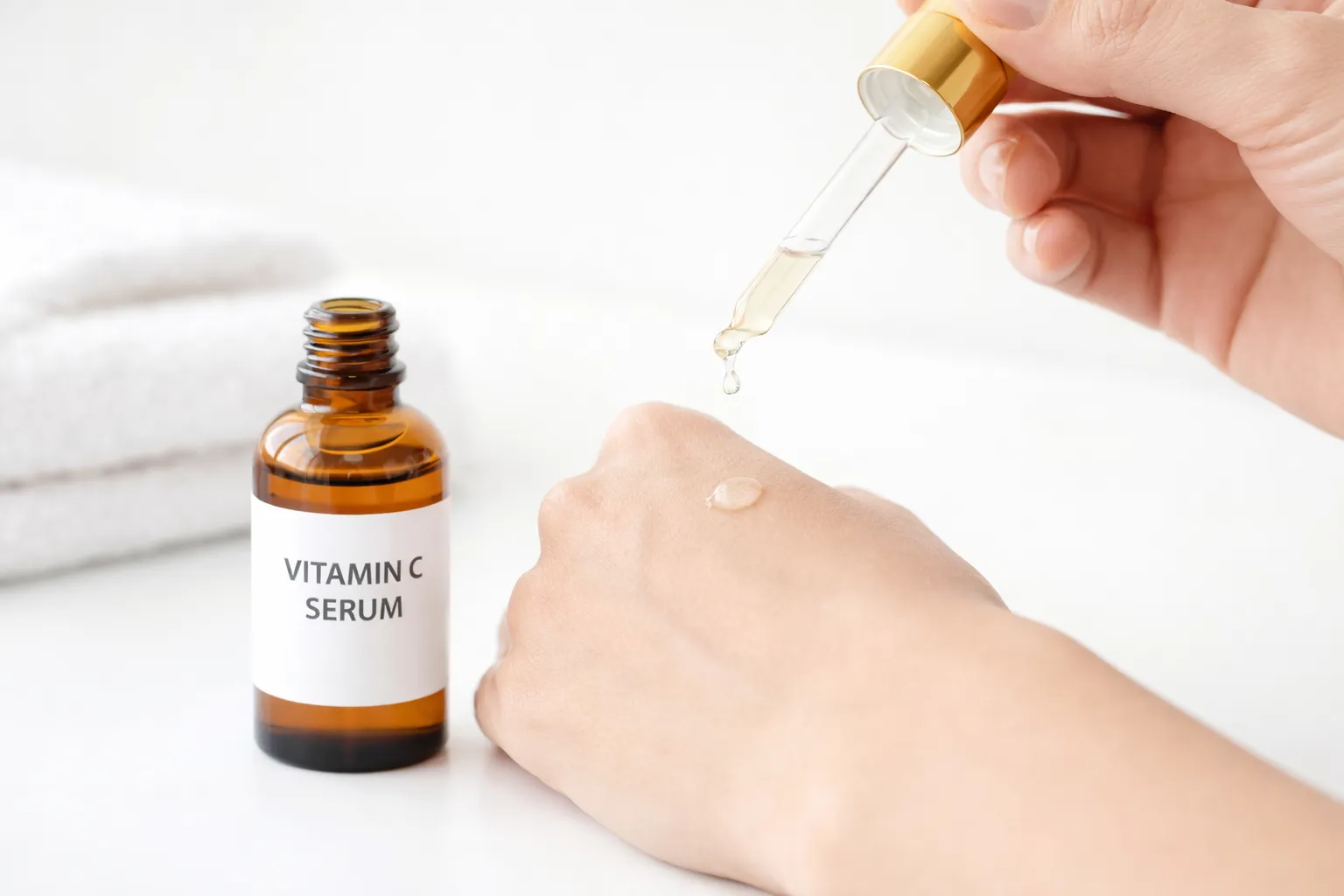
Based on dermatologist guidance and clinical studies, here is a realistic timeline of what to expect with consistent daily use.
During the first couple of weeks, the changes are usually mild.
What you may notice:
What’s happening beneath the surface: Vitamin C is building up in your skin, starting to neutralize free radicals and support early collagen activity.
Dermatologist note: Dr. Shamsa Kanwal advises that if you experience persistent stinging or redness beyond the first week, consider reducing frequency to every other day or switching to a lower concentration.
Around the third or fourth week, results become more visible.
What you may notice:
What’s happening beneath the surface: Vitamin C has reached effective concentrations in your skin. Pigment production is being regulated, and collagen support is active.
According to a January 2026 study analyzing over 112,000 verified customer reviews, most users first notice radiance and glow within 3–7 days, with consistent brightening becoming visible by weeks 3–4.
This is usually the point where most people start feeling confident their serum is working.
With consistent daily use, results become more obvious.
What you may notice:
What’s happening beneath the surface: Collagen production has increased, and accumulated pigment has been reduced through continued skin cell turnover.
A 2023 clinical study covered by Dermatology Times tested a vitamin C serum over 12 weeks and found:
For a deeper look at how to choose the right formula for your skin type, see our guide: Vitamin C Serum for Sensitive Skin: What Dermatologists Recommend.
After about two to three months, you’re seeing the full effect.
What you may notice:
What’s happening beneath the surface: Long-term use continues to support healthier skin, better texture, and sustained antioxidant protection.
A Mayo Clinic-affiliated study published in Plastic and Reconstructive Surgery (November 2024) found significant improvement in brown spots, wrinkles, and skin luminosity after 12 weeks of vitamin C use, with results lasting through 6 months.
Quick takeaway: With daily use, most people see visible improvements within 6 to 8 weeks and full results around the 12-week mark.
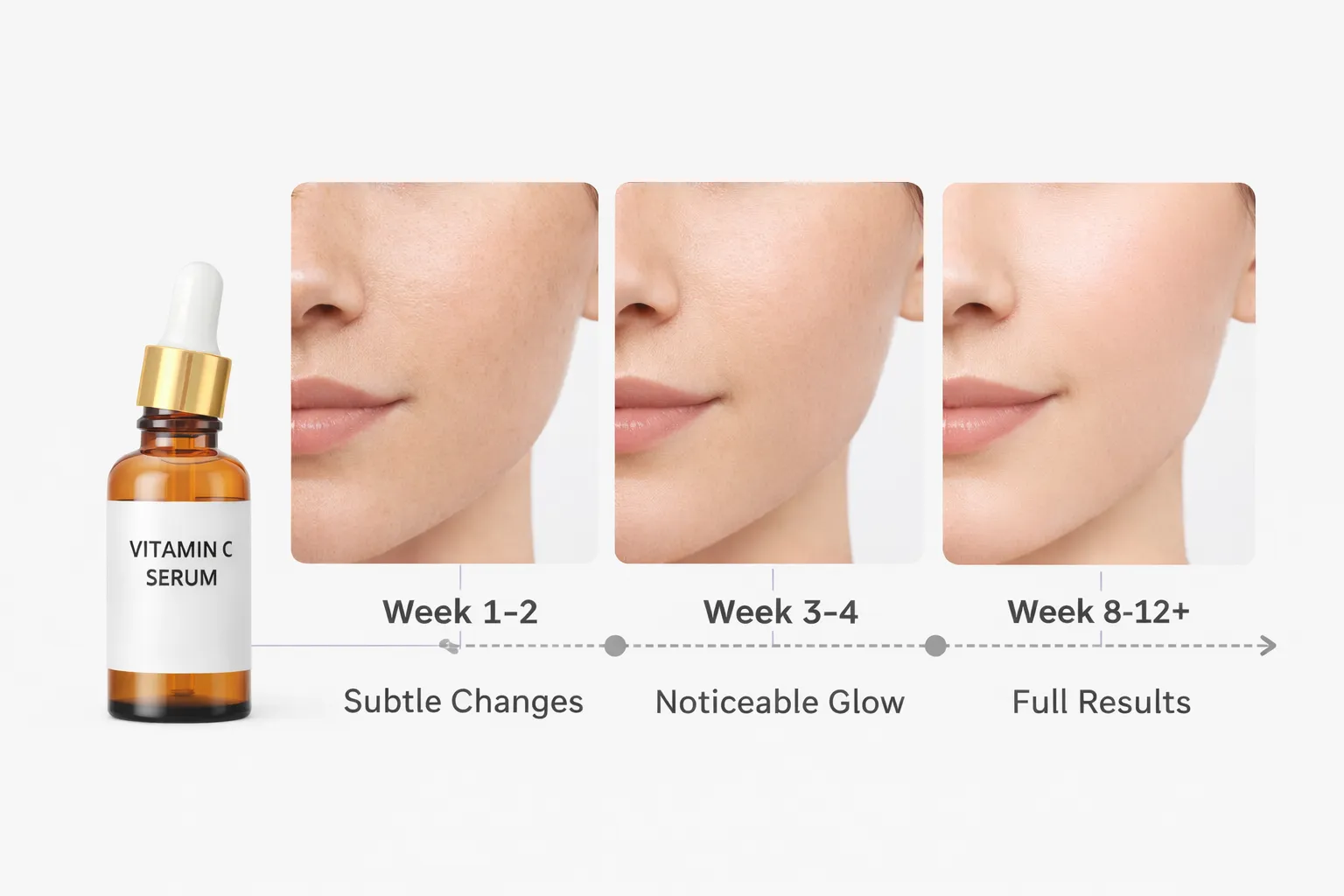
If it feels like progress is slow, there’s a good reason for that.
Your skin naturally renews itself in cycles, usually every 28 to 40 days. Vitamin C works alongside that process by helping new, healthier skin cells develop while older ones shed.
It also reduces excess pigmentation and supports collagen production, both of which take time to show visible changes.
That’s why consistency matters more than anything else. The longer you stick with it, the better the results, especially when you consider how long does it take vitamin c serum to work with a consistent routine.
Not everyone gets results at the same speed. According to dermatologists, several key factors make a big difference.
| Factor | How It Affects Speed | Dermatologist Guidance |
|---|---|---|
| Concentration | 10–15% works well for most; 20% works faster but may irritate sensitive skin | Start with 10–15% if you have sensitive skin |
| Consistency | Daily use is key; skipping days slows progress significantly | Consistency matters more than intensity |
| Formulation Quality | Stable, well-formulated serums perform better | Look for L-ascorbic acid with vitamin E and ferulic acid for stability |
| Skin Type | Oily skin may respond faster; sensitive skin may take longer to adjust | Start with every other day if your skin is sensitive |
| Sunscreen Use | Without sunscreen, UV exposure can undo benefits | Always follow with broad-spectrum sunscreen in the morning |
If you want to see results sooner, your routine plays a big role. Dermatologists recommend the following:
| Step | Recommendation |
|---|---|
| Apply once daily | Morning use is preferred for antioxidant protection throughout the day |
| Use on clean, dry skin | Apply after cleansing, before moisturizer |
| Wait 30–60 seconds | Allow serum to absorb fully before layering other products |
| Follow with moisturizer | Locks in hydration and supports skin barrier |
| Always finish with sunscreen | Critical for protecting results and preventing further damage |
If you’re new to vitamin C or want to ensure you’re applying it correctly, see our detailed guide: How to Use Vitamin C Serum for Brighter Skin.
If your skin is also oily or breakout-prone, our Best Skincare for Oily Skin That Work guide can help you build a routine that stays balanced.
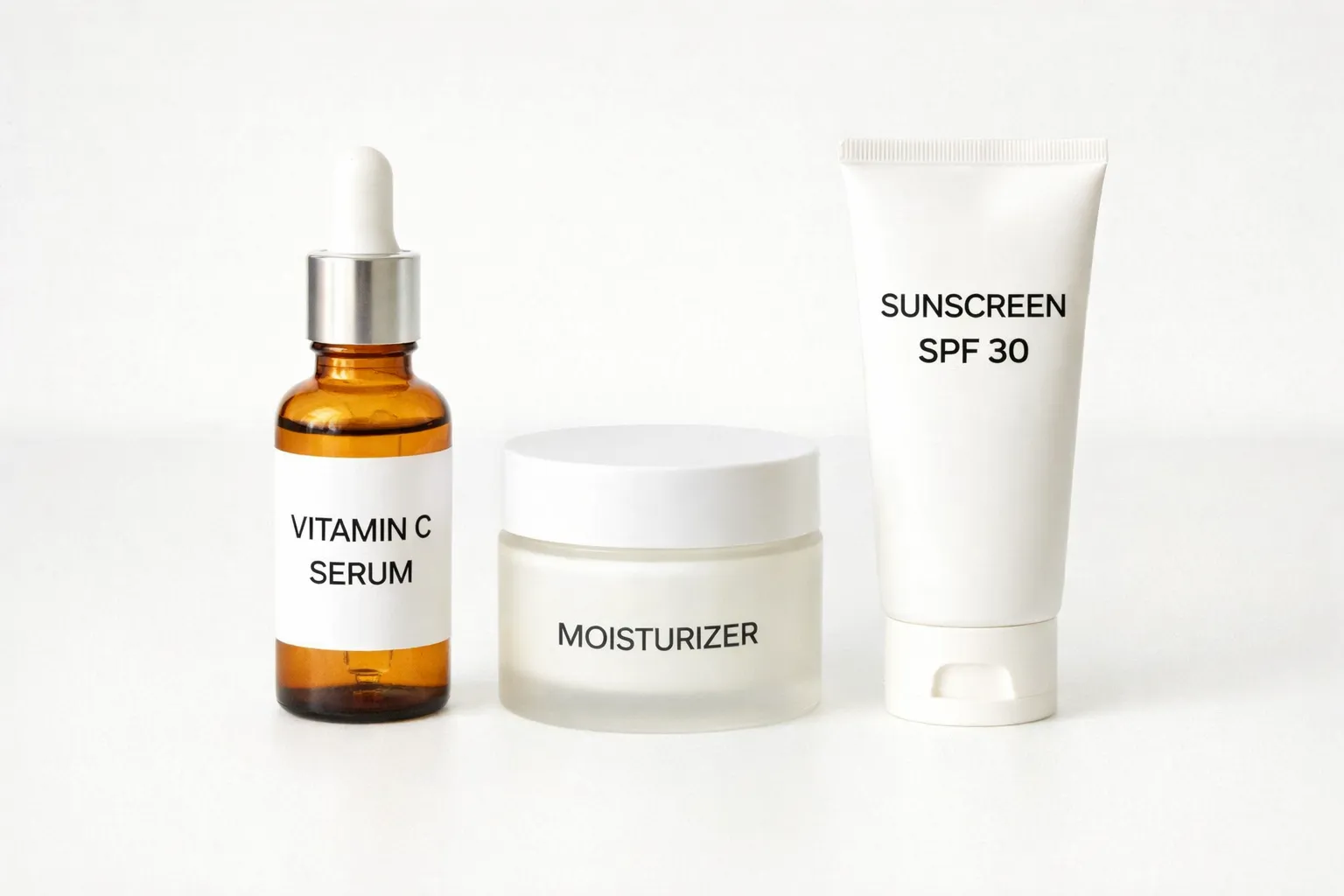
If you feel like your serum isn’t working, a few common issues could be the reason.
| Mistake | Why It Slows Results |
|---|---|
| Using inconsistently | Vitamin C needs daily buildup to reach effective concentrations |
| Applying too little | Using less than a few drops may not provide enough active ingredient |
| Skipping sunscreen | UV exposure breaks down vitamin C and causes new damage |
| Using expired or oxidized serum | Oxidized vitamin C turns yellow/brown and becomes ineffective |
| Expecting overnight changes | Realistic expectations prevent frustration and premature abandonment |
For most people, it absolutely is.
Vitamin C is one of the few skincare ingredients backed by consistent results. It helps improve brightness, smoothness, and overall skin tone while supporting long-term skin health.
The key is staying consistent and giving it enough time to work.
At this point, you should have a clear understanding of how long does vitamin c serum take to work and what affects your results.
For most people, absolutely.
Vitamin C is one of the few skincare ingredients backed by consistent clinical results, peer-reviewed studies, and dermatologist endorsement. It helps improve brightness, smoothness, and overall skin tone while supporting long-term skin health.
| Timeline | What to Expect | Clinical Evidence |
|---|---|---|
| 3–7 days | Early radiance, subtle glow | TruSkin 2026 study (112,000+ reviews) |
| 1–2 weeks | Subtle smoothness, hydration | Consumer-reported data |
| 3–4 weeks | Noticeable glow, early evening of tone | Clinical observation |
| 6–8 weeks | Visible improvement in dark spots and texture | Dermatology Times 2023 study |
| 8–12 weeks | Peak results; brighter, more even skin | Mayo Clinic 2024 study |
The key is consistency and patience. A well-formulated serum used correctly every day will deliver results—they just take time.
If you’re looking to build a complete routine, you may also find value in pairing vitamin C with a hydrating step. See our guide: Best Hyaluronic Acid Serum for Plump, Hydrated Skin.
Harvard Health – Why is topical vitamin C important for skin health? – Dr. Neera Nathan, MD, MSHS & Dr. Payal Patel, MD
Mayo Clinic / NIH – A Comparative Study of Two Topical Treatments for Photoaging of the Hands – Plastic and Reconstructive Surgery, November 2024. Clinical study showing significant improvement in brown spots, wrinkles, and skin luminosity after 12 weeks of vitamin C use, with results lasting 6 months.
Journal of Cosmetic Dermatology – Multicenter evaluation of a topical antioxidant serum – January 2024. Peer-reviewed study demonstrating increased elastin fibers and collagen stimulation after 12 weeks of vitamin C use.
Dermatology Times – Novel Serum Improves Overall Skin Quality – 2023 clinical study showing 19.6% improvement in fine lines, 26.6% increase in radiance, and 100% of participants showing improvement at 12 weeks.
TruSkin – How Long Does It Really Take for Vitamin C Serum to Work? 2026 Timeline Study – January 2026. Analysis of 112,000+ verified customer reviews combined with 23 clinical studies.
Walgreens The Thread – How to Use Vitamin C Serum – Dr. Anna H. Chacon, FAAD
Vitacost – Benefits of Vitamin C Serum – Dr. Shamsa Kanwal, MD
Expert buying advice, practical recommendations, and smart product picks — delivered straight to your inbox daily.
By signing up, you agree to the terms of service and privacy.

Get notified about new articles