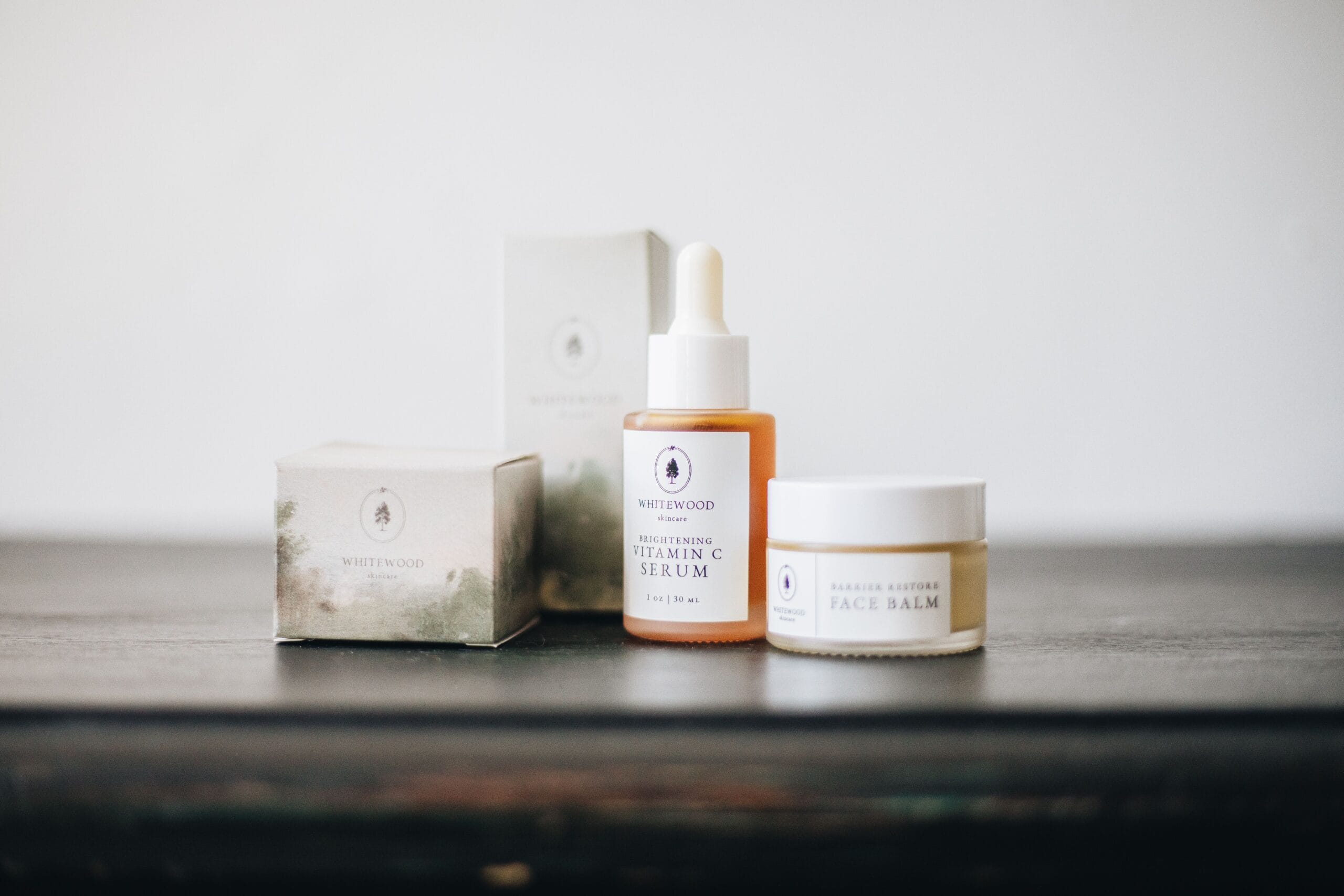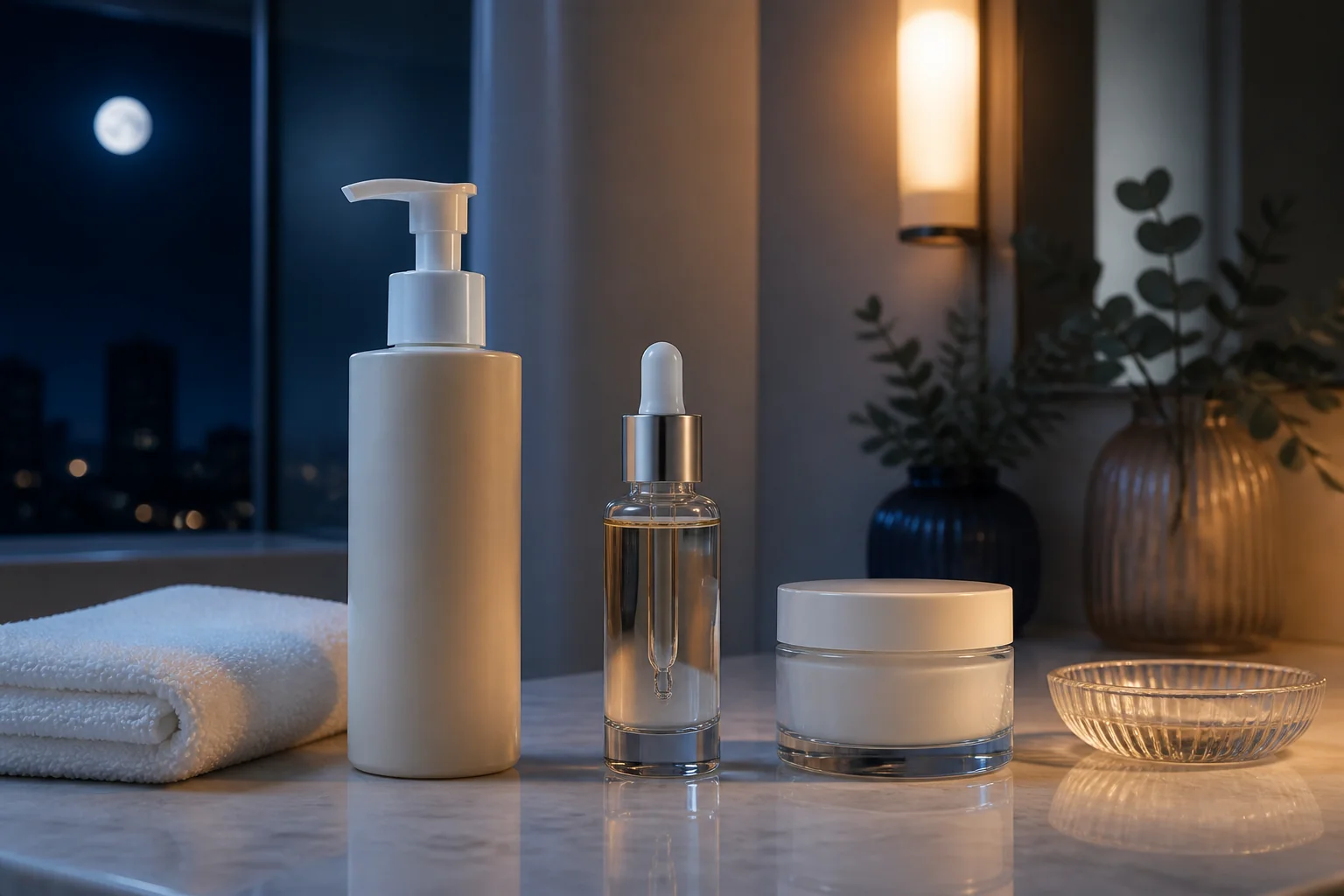
The correct night skincare routine order starts with cleansing. Next, use toner or essence if you want. Apply water-based serums, then your treatment. Add eye cream if needed. Finish with moisturizer, then facial oil or an overnight mask if needed. You do not need all seven steps. A gentle cleanser, moisturizer, and one useful treatment are enough for most people.
Quick-reference night skincare order
| Order | Step | Essential? | Best practice |
|---|---|---|---|
| 1 | Cleanser | Yes | Remove sunscreen, makeup, oil, and debris |
| 2 | Toner or essence | Optional | Choose a hydrating, alcohol-free formula |
| 3 | Serum | Optional | Apply thinner, water-based formulas first |
| 4 | Treatment | Optional | Use retinol or an exfoliant—not everything at once |
| 5 | Eye cream | Optional | Use a small amount around the orbital bone |
| 6 | Moisturizer | Yes | Support the skin barrier and seal in hydration |
| 7 | Facial oil or sleeping mask | Optional | Use last because it is more occlusive |
Simple rule: after cleansing, move from thinner, water-based products to thicker creams and oils. Treatments may need special placement based on their directions. The product label and your dermatologist’s advice take priority over a generic layering rule.
The minimal 3-step routine
- Cleanse: use a gentle cleanser that leaves skin comfortable, not tight.
- Treat: choose one product for your main goal, such as a hydrating serum, acne treatment, or beginner retinol.
- Moisturize: finish with a moisturizer suited to your skin type.
A simple routine often works better than a crowded shelf. Use it for a few weeks before adding another strong product. Go even slower if your skin is sensitive or prone to acne.
The full 7-step night skincare routine order
1. Cleanse—and double cleanse when it helps
Your first cleanse removes what accumulated during the day. Massage a gentle cleanser over damp skin with lukewarm water, rinse thoroughly, and pat dry rather than scrubbing.
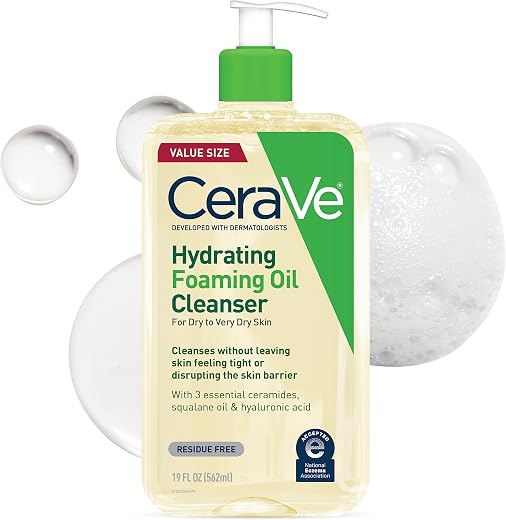
Double cleansing means starting with an oil cleanser, cleansing balm, or micellar water, then following with a water-based cleanser. It can help remove water-resistant sunscreen, heavy makeup, or excess oil. If one gentle cleanse works, you can stop there. A second cleanse may dry your skin.
2. Toner or essence (optional)
A hydrating toner or essence can add a light layer of moisture and prepare skin for serum. You do not need toner to clean your skin. A toner that stings is not proof that it works. Press it in with clean hands. If you use a hydrating serum, apply it while your skin is still slightly damp.
3. Apply serums from thin to thick
Serums pack useful ingredients into light formulas. If you use more than one, start with the thinnest. Let each layer settle before adding the next. Two serums are usually enough. Too many layers can pill or irritate your skin.
Where does hyaluronic acid go?
Hyaluronic acid goes after cleansing and toner, before moisturizer. Apply it to slightly damp skin, then promptly seal it with moisturizer. See our complete guide to using hyaluronic acid serum for amounts, layering, and common mistakes.

Where does vitamin C go if you use it at night?
Vitamin C goes on clean, dry skin before heavier serums and moisturizer. Many people prefer it in the morning for antioxidant support. Nighttime use can also work if the formula agrees with your skin. Beginners should avoid introducing vitamin C, exfoliating acids, and retinol in the same evening. Our guide to how to use vitamin C serum explains timing and tolerance in more detail.
4. Use one targeted treatment
Treatments include retinoids, exfoliating acids, benzoyl peroxide, and prescription products. Apply only as directed. Using several strong products at once does not improve results. It often leads to redness, peeling, and a damaged-feeling barrier.
Where does retinol go?
Retinol generally goes after cleansing and after your skin is dry, followed by moisturizer. Use about a pea-sized amount for the whole face, avoiding the eyes, corners of the nose, and lips. The Cleveland Clinic’s retinol guidance recommends patch testing, starting slowly, and finishing with a noncomedogenic moisturizer.
If retinol irritates your skin, try the “moisturizer sandwich.” Apply a light layer of moisturizer, then retinol, then moisturizer again. The American Academy of Dermatology advises starting with a less-intense retinoid and building up gradually. Retinoids should not be used during pregnancy; ask your obstetrician or dermatologist for a safe alternative.
5. Eye cream (optional)
Eye cream can go before or after moisturizer. Follow the texture: lighter products go first. Apply a rice-grain-sized amount around the orbital bone with light tapping. A gentle face moisturizer can often do the same job. Choose an eye product only when it meets a clear need and does not irritate your skin.
6. Moisturize
Moisturizer is the main step in the routine. It limits water loss and supports your skin barrier. It can also make strong products easier to use. Choose a gel-cream or lightweight lotion for oily skin. For dry skin, try a richer cream with ingredients such as ceramides, glycerin, or squalane.

7. Facial oil, sleeping mask, or overnight treatment
Facial oil usually goes last because it helps seal in the layers underneath and can make lighter, water-based products harder to apply evenly afterward. Press a few drops over moisturizer only when your skin needs extra comfort. A sleeping mask also goes last. It can replace a heavy night cream instead of going on top.
Essential vs. optional steps
| Usually essential | Use when it serves a purpose |
|---|---|
| Gentle cleanser | Oil cleanser or balm for makeup/sunscreen |
| Moisturizer | Toner or essence for extra hydration |
| One appropriate treatment, if needed | Serum, eye cream, facial oil, or sleeping mask |
More steps do not make a routine better. Each optional step should have a clear job. It may target dryness, breakouts, uneven tone, fine lines, or comfort. If you do not know what a product adds, stop using it for now.
How to exfoliate at night without overdoing it
Use a leave-on AHA or BHA after cleansing and before moisturizer, following the label. Start one night per week and increase only if your skin remains comfortable. The AAD’s guide to safe at-home exfoliation notes that retinoids, retinol, and benzoyl peroxide can increase sensitivity. Combining them with exfoliation may worsen dryness or irritation.
- AHA (such as glycolic or lactic acid): often chosen for surface texture and dullness.
- BHA (salicylic acid): oil-soluble and commonly used for clogged pores.
- Physical exfoliation: scrubs and brushes can be too aggressive for dry, sensitive, inflamed, or acne-prone skin.
Ingredient combinations and cautions
| Combination | Practical approach |
|---|---|
| Retinol + hyaluronic acid | Generally compatible; hydration may improve comfort |
| Retinol + niacinamide | Often compatible; introduce one product at a time |
| Retinol + AHA/BHA | Alternate nights at first to limit irritation |
| Retinol + benzoyl peroxide | Can be irritating; follow product or clinician directions |
| Vitamin C + exfoliating acids | Use at different times or on alternate days if sensitive |
| Multiple exfoliants | Usually unnecessary; choose one |
Patch test new products and add only one at a time. The AAD advises testing a product on a small area first. Follow the label for seven to 10 days before using it more widely. If a product causes a reaction, stop and gently wash it off. Get medical advice if symptoms are severe or do not go away.
Pregnancy caution: the AAD advises avoiding prescription and over-the-counter retinoids during pregnancy. Discuss questionable ingredients with your obstetrician or dermatologist. Review its pregnancy skincare guidance rather than relying on social-media ingredient lists.
Night routine by skin type
Dry skin
Use a creamy, fragrance-free cleanser; a hydrating toner if desired; hyaluronic acid on damp skin; and a ceramide-rich cream. Our guide to the best face moisturizer for dry skin can help you compare richer options. Add a few drops of facial oil only if the moisturizer is not enough. Exfoliate only as needed. Do not use it on the same night as retinol.
Oily skin
Choose a gentle foaming or gel cleanser, a lightweight hydrating serum, and a noncomedogenic gel-cream. Salicylic acid or a retinoid may address clogged pores, but introduce one active at a time. Skipping moisturizer can leave skin uncomfortable without fixing the cause of oiliness.
Combination skin
Keep the base routine gentle, then adjust by zone. Use a light moisturizer everywhere and a richer layer only on dry areas. Apply pore-focused treatment to the oily T-zone rather than automatically treating the whole face.
Sensitive skin
Prioritize a fragrance-free cleanser and simple moisturizer. Patch test, introduce one new product at a time, and leave several nights between early retinol uses. If you have eczema, rosacea, persistent burning, or unexplained redness, ask a dermatologist before adding strong actives.
Acne-prone skin
Look for noncomedogenic products and avoid abrasive scrubs. A salicylic acid or retinoid treatment may help some types of acne. Moderate, severe, painful, or scarring acne deserves professional care. Do not keep adding treatments when irritation worsens breakouts.
Common night skincare mistakes
- Using too many actives: irritation can undo the comfort and consistency a routine needs.
- Applying retinol to wet skin: beginners may find this increases irritation.
- Skipping moisturizer: oily and acne-prone skin still needs barrier support.
- Double cleansing automatically: do it when you have something substantial to remove.
- Adding every new product at once: you will not know which one helped or caused a reaction.
- Using facial oil before water-based serum: the oil can interfere with even layering.
- Ignoring the next morning: use broad-spectrum SPF 30 or higher, especially when using retinoids or exfoliating acids.
Frequently Asked Questions
How long should I wait between skincare steps?
You usually do not need a timer. Wait only until the product has spread evenly and is no longer excessively wet or pilling. Retinol is the exception for many beginners: applying it to fully dry skin may reduce irritation.
Does retinol go before or after moisturizer?
Standard order is retinol before moisturizer. Sensitive or dry skin may tolerate moisturizer before and after retinol—the sandwich method—better. Follow prescription directions when they differ.
Can I use hyaluronic acid and retinol together?
Yes, they are generally compatible. Hyaluronic acid adds hydration and may offset some dryness from retinol. Apply based on formula directions and finish with moisturizer.
Should vitamin C be used at night or in the morning?
Either can work, but morning use is common because vitamin C provides antioxidant support alongside sunscreen. You can also use it at night if it fits your routine and does not cause irritation. Results depend on consistency; see our vitamin C results timeline for realistic expectations.
Can I use a sleeping mask every night?
Some moisturizing masks are designed for frequent use, while exfoliating or active treatments are not. Check the label, and reduce frequency if you notice congestion, burning, or persistent redness.
What is the correct order if I use an acne spot treatment?
Follow its label. Many spot treatments go on clean, dry skin before moisturizer. Some hydrocolloid patches need completely clean skin with no product underneath. Avoid layering a spot treatment over the whole face.
The bottom line
The best night skincare routine order should be easy to follow without constantly irritating your skin. Cleanse, add optional hydration, use one purposeful treatment, and moisturize. Place oils or masks last. Start with the basics, then add another step only when you know what you want it to do.
Stop trying new products if your skin stays painful, swollen, cracked, or inflamed. See a board-certified dermatologist if acne causes scars.