Can a smartwatch measure blood pressure? Some can, but a wrist reading may be a cuff measurement, a software estimate, or an alert that never gives you a blood pressure number. Those differences determine what the result can tell you and whether it belongs in a medical monitoring plan.
For home monitoring, the American Heart Association recommends a validated automatic upper-arm cuff. Choose a device with your healthcare professional if your care depends on the readings. A familiar brand, detailed app or reassuring watch result does not establish medical accuracy.
This research-based guide explains the methods, current Samsung and Apple features, and the checks worth making before spending money. It draws on manufacturer documentation and health-authority guidance, not hands-on testing or personal medical advice.
Can a Smartwatch Measure Blood Pressure? The Key Differences
| Device or feature | What it provides | Main limitation |
|---|---|---|
| Validated upper-arm cuff | Numerical blood pressure readings | Correct cuff size and technique still matter |
| Watch with an inflatable cuff | Pressure-based readings at the wrist | Validation, wrist position and regional authorization are device-specific |
| Optical smartwatch estimate | A calculated blood pressure value, often after cuff calibration | An estimate is not automatically suitable for diagnosis or treatment |
| Hypertension notification | An alert about a possible pattern of high blood pressure | It does not provide your current systolic and diastolic numbers |
| Heart rate, ECG or blood oxygen | Different heart or oxygen measurements | None is interchangeable with a blood pressure reading |
Blood pressure is recorded as two values in millimeters of mercury, or mm Hg. Systolic is the pressure when the heart contracts; diastolic is the pressure between beats. A pulse reading in beats per minute describes something else. If you are new to wearable health tools, start with what a smartwatch can actually do.
How Blood Pressure Watches Work
Watches with an inflatable cuff
A cuff-equipped watch tightens a small airbag around the wrist and detects pressure changes. This is a different measurement method from an ordinary optical heart-rate sensor. It also requires the right strap fit and the posture specified in the instructions.
The Huawei Watch D2 is one example: Huawei describes an inflatable wrist cuff, a pressure sensor and an oscillometric measurement method. Its regional product documentation also describes scheduled measurements. That is an explanation of the design, not a universal recommendation or a claim of U.S. authorization. Check the exact model and intended use where you live.
Cuffless optical estimates
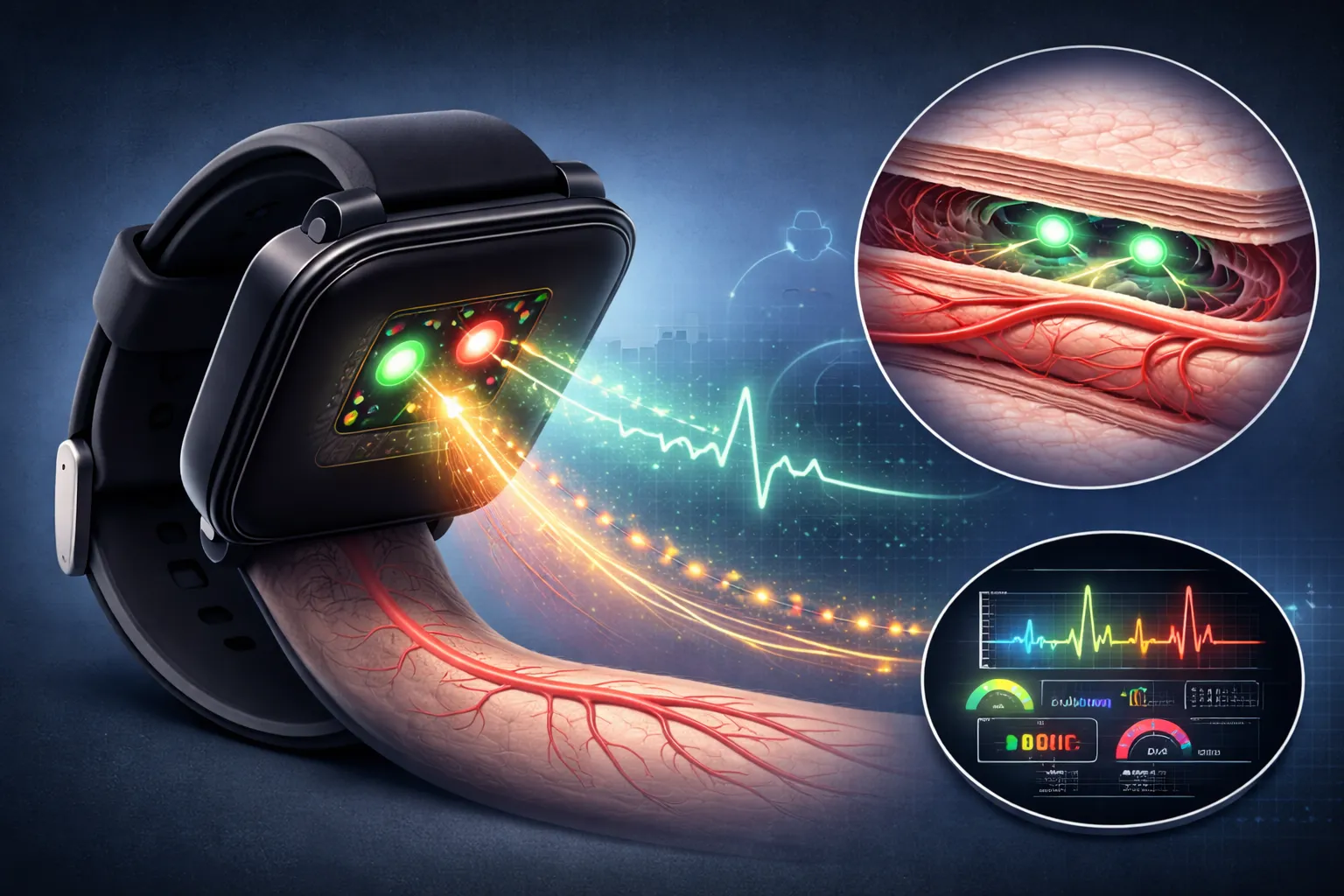
Optical sensors shine light into the skin and detect changes in blood volume. Software can use features of that signal to estimate blood pressure, sometimes using cuff readings as a reference. The sensor is not directly reading pressure inside an artery.
Calibration establishes that reference; it does not prove that later estimates will follow every real change. In a 2025 study of watch-based monitoring, researchers reported limitations in detecting blood pressure variability and errors around recalibration. Findings from one device or study should not be treated as a rating of every wearable.
What Samsung and Apple Watches Can Tell You
Samsung Galaxy Watch: estimates that require calibration
Samsung announced a phased U.S. rollout of blood pressure monitoring on March 31, 2026. Its U.S. announcement describes estimates based on a calibrated value, with an upper-arm cuff needed initially and every 28 days. Samsung labels this feature for wellness, not diagnosis or treatment.
The announcement lists Galaxy Watch4 and later models with Wear OS 4.0 or higher, plus a compatible Samsung Galaxy phone running Android 12 or higher. Availability also depends on the market and app support. Confirm the current requirements for your particular watch and phone before buying; ordinary Android pairing alone does not guarantee access.
Follow the Samsung Health Monitor instructions for setup, calibration and measurement. Use the same wrist as during calibration and keep the fit snug without overtightening. Do not sideload an unsupported feature as a substitute for checking local availability and suitability.
Apple Watch: hypertension alerts are not cuff readings
Apple’s hypertension notifications look for patterns over 30-day periods. They do not show your current systolic and diastolic blood pressure. An alert prompts follow-up with a separate cuff; no alert does not rule out high blood pressure.
Apple lists Series 9 or later and Ultra 2 or later, with current software and a compatible iPhone. The feature is unavailable on Apple Watch SE. Eligibility includes being at least 22, not pregnant and not already diagnosed with hypertension, with regional availability restrictions. It is not intended to manage an existing hypertension diagnosis.
These features answer different questions. A numerical estimate asks what your pressure might be at a particular time. An alert flags a pattern for further checking. Neither should be confused with permission to change medication.
How Accurate Are Smartwatch Blood Pressure Readings?
There is no meaningful accuracy score for smartwatches as a whole. Ask what the exact device was tested against, who took part, and whether the evidence covers the way you plan to use it. A claim that readings “match a cuff” is incomplete without those details.
- Check the measurement conditions. Validation while seated and still does not automatically establish accuracy during exercise, sleep or ordinary movement.
- Check calibration requirements. A correct reference reading matters, but agreement immediately after calibration is not the same as reliable performance weeks later.
- Check the intended population. Evidence for one group should not be assumed to cover pregnancy, children or every medical condition.
- Check the exact model and software. Similar product names and identical-looking cases do not establish equivalent performance.
Also separate clinical validation from regulatory authorization. Validation concerns performance against a defined testing standard; authorization concerns permission for a particular marketed use. Neither should be inferred from marketplace reviews, an app-store listing or the phrase “medical-grade.”
The FDA warns against unauthorized devices that claim to measure or estimate blood pressure, including wearable software. Its guidance directs consumers to check the exact device in the FDA’s database and seek an appropriate authorized monitor. A seller calling a feature “wellness” is not proof that the FDA reviewed its blood pressure accuracy.
How to Check Blood Pressure at Home
For readings your care team can use, start with an appropriate validated upper-arm monitor and ask them to check your technique. Keep a record of cuff results separately from watch estimates so the source of each number stays clear.
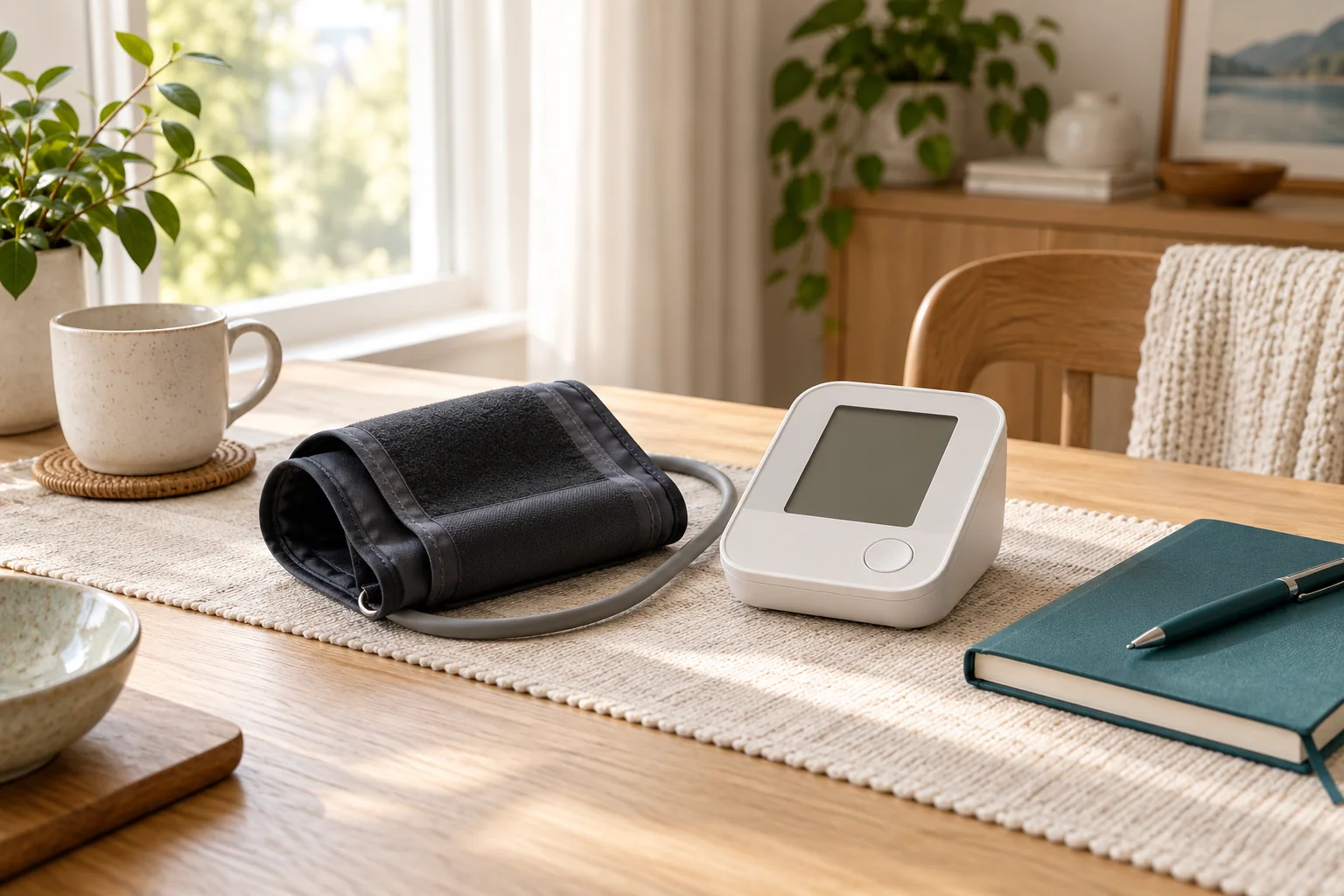
- Avoid smoking, caffeine and exercise for 30 minutes beforehand; empty your bladder.
- Rest quietly for at least five minutes. Sit with your back supported, feet flat and legs uncrossed.
- Place the correctly sized cuff on bare upper-arm skin. Support the arm at heart level.
- Stay still and quiet during the measurement. Follow your monitor’s instructions.
- Take two readings about a minute apart and record both. Agree on timing and frequency with your healthcare professional.
These steps follow CDC measurement guidance and the AHA’s home-monitoring advice. A rushed cuff reading can also mislead, so checking a watch against a cuff only helps when the reference reading is taken properly.
What to Do About an Unusual Reading or Alert
If a watch reports an unexpected number and you feel well, check with a suitable cuff and keep a record to discuss with your healthcare professional. Do not repeatedly adjust the watch until it produces a number you prefer. Do not start, stop or change prescribed treatment based on a wearable result.
For cuff readings above 180 systolic and/or 120 diastolic, the AHA advises waiting at least a minute and checking again. If still that high, contact a healthcare professional immediately. With chest pain, shortness of breath, weakness, vision changes or difficulty speaking, call emergency services. Do not delay emergency care to obtain a watch reading.
High blood pressure often has no symptoms, so feeling well is not a substitute for measurement. Equally, a normal-looking watch result should not override symptoms or a monitoring plan agreed with your care team.
What to Check Before Buying
- Your actual goal: Do you need medical home monitoring, occasional wellness information, or a watch for activity and notifications? Start with the tool that meets that need.
- Evidence and local availability: Confirm the exact feature, device, authorization and restrictions in your country. An overseas review may describe a different service.
- Total cost: Include any required calibration cuff, compatible phone, subscription and replacement strap. A watch may add to the cost of home monitoring rather than replace it.
- Everyday usability: Consider screen readability, fastening the strap, charging, reminders and exporting records. Useful data should be easy to share with your care team.
For general fitness features, our Garmin vs Fitbit comparison explains the different training and wellness approaches. Our Android smartwatch guide covers broader buying choices; inclusion there does not establish blood pressure capability.
The British Heart Foundation’s wearable guidance also raises a practical question: will extra monitoring help you, or make you worry more? Consider whether you will use the information constructively. Our guide to whether a smartwatch is worth it can help separate useful everyday features from expensive extras.
Frequently Asked Questions
Can an ordinary smartwatch measure blood pressure without a cuff?
Some devices calculate cuffless estimates, but an ordinary heart-rate sensor does not automatically provide a validated blood pressure measurement. Check the exact feature, its evidence and whether calibration with a cuff is required.
Does an Apple Watch give a blood pressure number?
Its hypertension notification feature does not provide current systolic and diastolic readings. It looks for patterns that may merit follow-up. You need a separate cuff to measure and log blood pressure.
How often does a Samsung Galaxy Watch need blood pressure calibration?
Samsung specifies calibration with an upper-arm cuff every 28 days for its blood pressure monitoring feature. Follow the current instructions for your supported watch, phone and region.
Which smartwatch is best for monitoring high blood pressure?
There is no universal best watch for that purpose. If you need home readings for hypertension care, ask your healthcare professional about a validated upper-arm monitor first. Consider a wearable only within its verified intended use.
Can heart rate or an ECG tell me my blood pressure?
No. Heart rate, heart rhythm and blood pressure are different measurements. A normal pulse or watch ECG cannot establish that your blood pressure is normal.
Final Takeaway
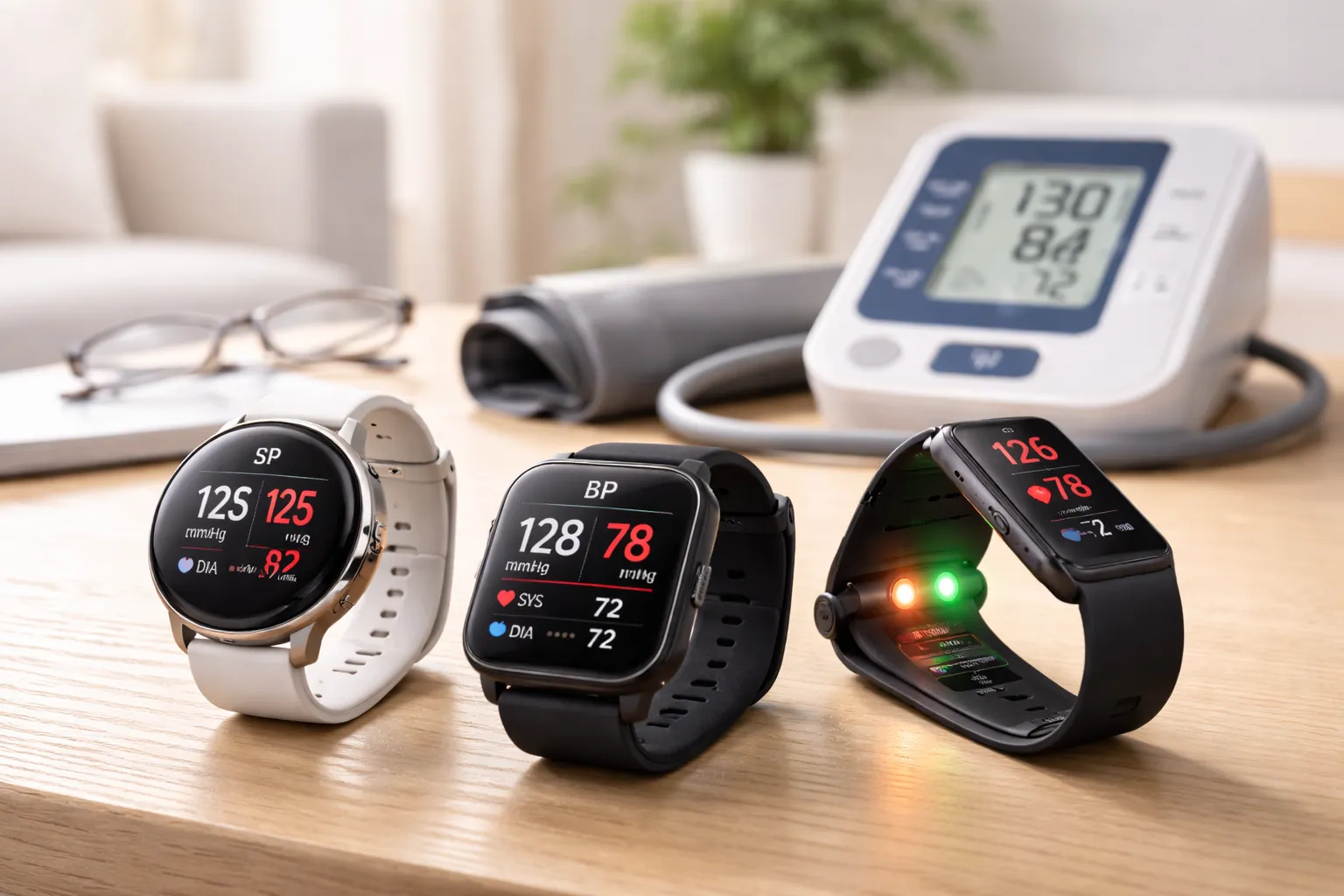
A smartwatch can offer a blood pressure measurement, an estimate or a notification, depending on its hardware and software. Read the feature’s actual purpose before trusting the display. For home medical monitoring, prioritize an appropriate validated cuff and a plan with your healthcare professional; choose smartwatch extras for the additional benefits you will use.
Sources and Further Reading
- American Heart Association: home blood pressure monitoring
- CDC: measuring your blood pressure
- FDA: unauthorized blood pressure devices
- Samsung: U.S. blood pressure feature announcement
- Samsung Health Monitor: instructions and limitations
- Apple: hypertension notification requirements
- Huawei Watch D2: measurement design
- Clinical Hypertension: 2025 watch-based monitoring study
- British Heart Foundation: fitness tracker limitations