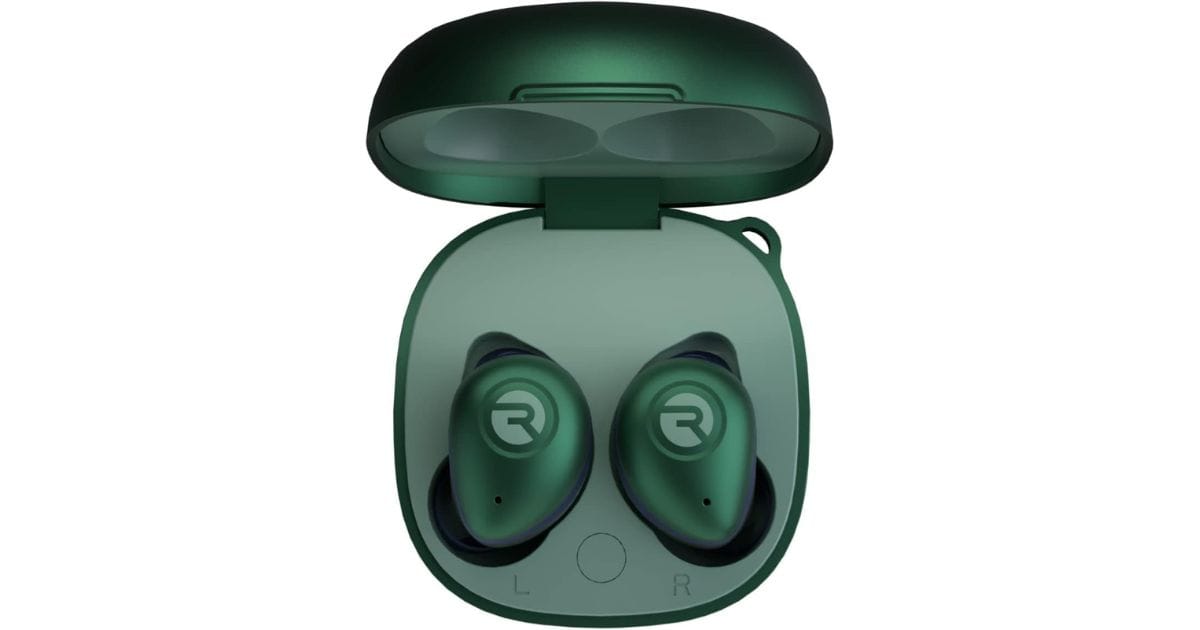
Quick Answer
Raycon earbuds are easiest to choose once you decide whether you want to seal your ears or stay aware of what is around you. The Everyday Classic is the default starting point, the Fitness true-wireless pair carries the strongest specifications in the range for less than the Pro, and the two open-ear Raycon earbuds exist for people who want to hear traffic and conversation. The Pro is worth its premium only if you spend a lot of your day on calls.
Compare Our Top Picks
Six Raycon earbuds for different ears, budgets and uses. Open the comparison links below to check the current price and the exact variant before you buy.




Comparison Table: Find Your Fit
| Model | Best for | Key specs as listed | Main tradeoff |
|---|---|---|---|
| Everyday Classic | Everyday listening | 32 h, sealed, ANC stated | No water rating; shortest battery |
| Essential Open | Awareness outdoors | 36 h, IPX4, open hook | Limited bass by design |
| Pro | Calls and commuting | 40 h, IPX5, hybrid ANC, 6 mics | Most expensive in the range |
| Fitness Open | Light training | 40 h, IPX5, open hook | No noise cancelling |
| Fitness True Wireless | Serious workouts | 56 h, IPX7, ANC | Fewer mics than the Pro |
| Bone Conduction | Road running | Open ear, water-resistant | Sound quality trades off for awareness |
Battery and water-resistance figures are as stated on each model’s current merchant listing. Confirm the exact variant, colour and generation on the merchant page before ordering, because Raycon has re-released earbuds under the same names.
How We Chose These Raycon Earbuds
This is a research-based buying guide to Raycon earbuds, not a hands-on test. We compared the specifications stated on each current merchant listing, then weighed them against independent measurements published by reviewers who do test in controlled conditions. Where a manufacturer claim and an independent measurement disagree, we say so below rather than repeating the claim.
Two findings from that reading are worth knowing before you choose any model. SoundGuys measured the Everyday generation at 6 hours 43 minutes against a claimed 8 hours, and rated its microphone the weakest part of the product. And TechRadar notes that Raycon supports only the SBC and AAC codecs, which matters more on Android than on an iPhone, and that the brand’s well-known YouTube endorsements were paid sponsorships.
1. Raycon Everyday Classic — the default starting point
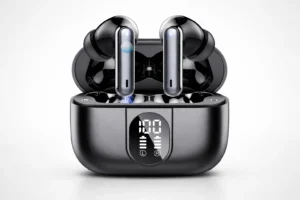
This is the model most people mean when they say “Raycon earbuds”, and at the bottom of the range it is a reasonable first pair. The listing states 32 hours of total playtime, a sealed in-ear fit and active noise cancelling. The seal is what lets it produce bass the two open-ear models physically cannot.
Be aware of two things independent testing has raised. SoundGuys measured the Everyday generation at 6 hours 43 minutes of continuous playback against a claimed 8 hours, and scored its microphone the lowest of any category in their review — in a poll of more than 4,000 of their readers, over a third rated the mic bad or worse. If calls are central to your day, the Pro exists for that reason, and our Raycon versus AirPods comparison covers how it stacks up against the obvious alternative. The listing also states no water-resistance rating, so this is not the pair to train in.
- Sealed fit produces bass the open-ear models cannot
- Active noise cancelling at the lowest price in the range
- Listed at 32 hours total with the case
- Independently measured well short of the claimed per-charge battery
- Microphone is the weakest part of the product
- No water-resistance rating stated
2. Raycon Essential Open — when you need to hear around you
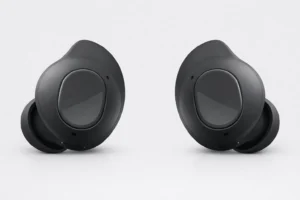
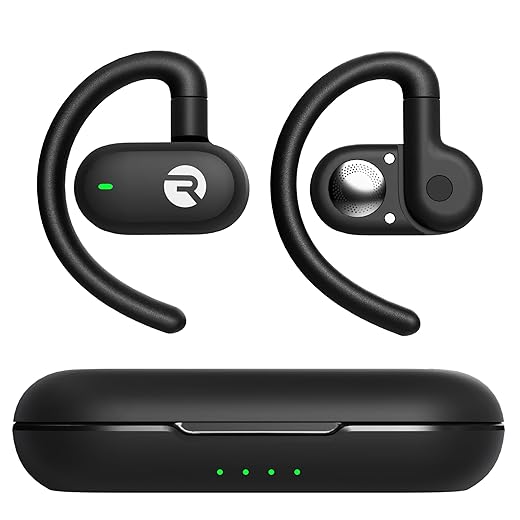
An open-ear design that hooks over the ear rather than sealing the canal, so traffic, announcements and conversation stay audible. That is the whole point of it, and it is the right choice if you walk or cycle near roads, or if sealed tips make your ears ache after an hour.
The trade-off is physics, not a defect: with nothing sealing the canal, bass impact and isolation are limited whatever the drivers do. The listing states IPX4, 36 hours and Bluetooth 6.0 — the newest radio in this group, though note that Raycon supports only the SBC and AAC codecs regardless of Bluetooth version, which matters more on Android — see our guide to the best earbuds for Android if that is your phone.
- Open fit keeps you aware of traffic and surroundings
- Avoids the pressure some people get from sealed tips
- Listed at 36 hours, longer than the Everyday
- Open design limits bass and isolation by nature
- IPX4 is the lowest water rating here
- No noise cancelling
3. Raycon Pro — only if you are on calls all day
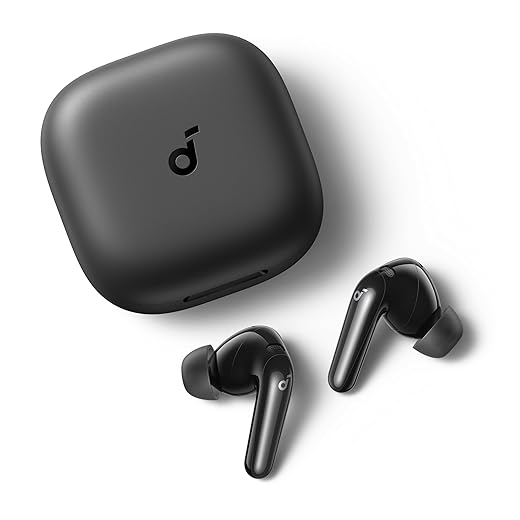
The Pro is the one model that directly answers the biggest complaint about Raycon earbuds. Its listing states six microphones against a single built-in mic elsewhere, and given that independent reviewers single out Raycon’s mic quality as its weak point, that is the specification most likely to be noticed by whoever you are speaking to. It adds Hybrid Active Noise Cancellation with an Awareness Mode, 40 hours, IPX5 and Bluetooth 5.3.
Be clear-eyed about the price. This is the most expensive model here, and the Fitness true-wireless pair below states more battery and a higher water rating for less money. TechRadar made the same point about Raycon’s top tier more generally — at this price you are shopping against AirPods, and the extra features have to earn it. If you mostly listen rather than talk, they probably do not.
- Six stated microphones, the most in the range
- Hybrid ANC with a switchable Awareness Mode
- Bluetooth 5.3, IPX5 and a stated 40-hour battery
- Most expensive model in the lineup
- Beaten on battery and water rating by a cheaper Raycon
- Competes directly with AirPods at this price
4. Raycon Fitness Open — for light training
This takes the same open-hook concept as the Essential and improves the two numbers that matter outdoors: the listing states IPX5 rather than IPX4, and 40 hours rather than 36. For gym sessions and walks where you want to stay aware of the room, it is the more sensible of the two open-ear Raycon earbuds.
As with any open design, it is not built for immersive listening and will not hold up acoustically on a busy train. There is no noise cancelling, by design.
- IPX5 and a stated 40 hours improve on the Essential Open
- Hook fit stays put during movement without sealing the ear
- Keeps you aware of your surroundings outdoors
- No noise cancelling
- Open design limits bass, as with all open-ear models
5. Raycon Fitness True Wireless — the strongest specifications here
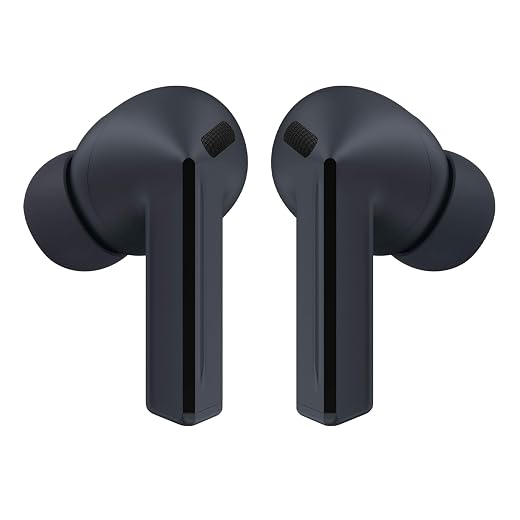
On stated specifications this is the best pair of Raycon earbuds here, and it is not the most expensive. The listing claims 56 hours of total battery — comfortably the most here — with IPX7, active noise cancellation, an Awareness Mode and Bluetooth 5.3.
IPX7 is the specification that matters if you sweat heavily or run outdoors in bad weather, and it is a meaningful step above the IPX4 and IPX5 elsewhere in the Raycon earbuds range. The compromise against the Pro is the microphone array. For anyone whose earbuds are mostly for training and music rather than meetings, this is the better buy of the two, at roughly thirty dollars less. For bedtime listening specifically, our sleep earbuds guide is the more relevant comparison.
- Stated 56-hour battery, the longest in the range
- IPX7, the highest water rating of the six
- Active noise cancelling plus an Awareness Mode
- Costs less than the Pro
- Fewer microphones than the Pro for call quality
- Sealed fit can feel isolating for all-day casual wear
6. Raycon Bone Conduction Headphones — for running on roads
This is the only design in the range that leaves the ear canal completely open. Bone conduction sends sound through the cheekbone rather than into the ear, so both ears stay entirely unobstructed — a different proposition from the open-hook models above, which still sit over the ear opening.
The trade-off is the sharpest in this guide. Bone conduction gives up bass and detail in a way no tuning can recover, and it is the wrong choice for music you actually want to sit and listen to. For road running, where hearing a car behind you matters more than how the bass lands, that is a trade worth making.
- Leaves both ear canals completely open
- Water-resistant for outdoor training
- The safest option of the six for road running
- Bass and detail are limited by the format itself
- Not a serious music-listening option
How to Choose Between Them
- Decide open or sealed first. This matters more than anything else on the spec sheet. A sealed fit blocks outside sound and lets the driver produce real bass; an open hook deliberately leaves your ear canal clear so you can hear a car or a colleague.
- Match the battery to how you charge. The 32-to-56-hour spread describes total time including the case, not one charge. If you top up every couple of days the difference barely registers.
- Read the IP rating properly. IPX4 covers splashes and sweat, IPX5 adds a low-pressure jet, IPX7 is rated for brief immersion. If you train outdoors in winter, that step up is the most useful line in this comparison.
- Buy on microphones if you take calls. Only the Pro states a multi-microphone array. It is the single clearest divider in the range.
One more check that costs nothing: confirm the generation on the merchant page. Raycon has re-released models under the same name and look, so an older review you find online may not describe the pair in the listing in front of you.
What Independent Reviewers Say About the Brand
Raycon earbuds became well known through YouTube sponsorships rather than reviews, and that is worth factoring in. TechRadar describes the company as making decent products that are not as perfect as the marketing suggests, and points out that the endorsements were paid placements and that customer reviews on Raycon’s own site tend to omit the downsides.
The consistent criticism of Raycon earbuds across independent coverage is sound tuning and microphone quality rather than build or comfort. SoundGuys found the Everyday generation’s frequency response emphasised bass and treble against their target curve, with no companion app to correct it. If neutral sound is your priority, that is a real limitation; if you want bass-forward earbuds for a commute or a gym, it is much less of one.
Frequently Asked Questions
Are Raycon earbuds worth it?
For the price, the mid-range models make a reasonable case, particularly the Fitness true-wireless pair. The weakest arguments are at the top of the range, where the Pro competes on price with AirPods, and on call quality, which independent reviewers consistently rate as Raycon’s weak point.
Which Raycon earbuds have the best battery life?
The Fitness Bluetooth True Wireless, whose listing states 56 hours of total battery with the case. Note that independent testing of the Everyday generation measured noticeably less continuous playback than Raycon claimed, so treat stated figures as a ceiling rather than a guarantee.
Do Raycon earbuds have noise cancelling?
The Everyday, Pro and Fitness true-wireless listings state active noise cancellation; the Pro adds a hybrid system with an Awareness Mode. The two open-ear models do not have it, because an open design cannot seal the ear canal in the first place.
Are Raycon earbuds good for the gym?
The Fitness true-wireless pair is the one to look at, with a stated IPX7 rating that covers brief immersion. The Fitness Open is the lighter-duty alternative at IPX5 if you prefer to hear the room while you train.
Do Raycon earbuds work well with Android?
They connect to any Bluetooth phone, but Raycon supports only the SBC and AAC codecs. AAC is handled better by iPhones than by most Android devices, so Android owners who care about wireless audio quality may want to compare against earbuds offering aptX or LDAC.
Final Recommendation
If you want one pair and do not want to think about it, the Everyday Classic is the sensible entry point — just do not buy it for workouts or for calls. If you train, the Fitness true-wireless pair is the strongest set of specifications in the range and costs less than the Pro.
Buy the Pro only if calls are a daily part of your routine, since the microphone array is the one thing none of the others offer. And if you need to hear traffic, choose an open model and accept the limits on bass.
Sources
- SoundGuys — Raycon Everyday Earbuds (E25) measured review
- TechRadar — Should I buy Raycon earbuds?
- Product specifications and prices are supplied live from current Amazon listings via the product cards above.