For most Android phones, the Samsung Galaxy Buds FE are the pair to start with. They give you active noise cancellation, a fit that stays put, and the Android conveniences most people actually use — auto-switching between your devices and one-tap pairing — without the premium price. If you carry a Galaxy phone the case is stronger still, because the translation and Auto Switch features are built around Samsung’s own apps.
The other five picks exist because the best earbuds for Android depend entirely on what you are buying for. One is under $20, one is open-ear and built for running, one is the premium Samsung option, one gets you 60 hours of listening for about the price of a takeaway, and one is there for everyone whose phone is not a Galaxy. Each sits at a genuinely different point, so the list is not six versions of the same earbud.
Compare Our Top Picks
Prices come from our merchant feed and move often. Check the current figure before you decide — the gap between these five changes more than the earbuds do.


How the Six Compare at a Glance
| Pick | Best for | Key stated specs | Price |
|---|---|---|---|
| Galaxy Buds FE | Best overall | ANC, wing-tip fit, Auto Switch | $73.42 |
| Soundcore Liberty 4 NC | Any Android phone | Adaptive ANC, LDAC, 8h with ANC on | $79.99 |
| TAGRY X08 | Longest battery | 6h a bud, 60h with case, IPX5 | $35.99 |
| Galaxy Buds 3 Pro | Best premium | Adaptive ANC, adaptive EQ, 2-yr warranty | $173.32 |
| JLab Go Air Pop+ | Cheapest | 9+h a bud, app EQ, Bluetooth 5.1 | $19.99 |
| SHOKZ OpenFit 2 | Running and gym | Open-ear, IP55, 11h a charge, 9.4g | $179.95 |
Specifications above are the manufacturers’ and sellers’ own stated figures, not our measurements.
How We Chose the Best Earbuds for Android
This is a research-based buying guide, not a hands-on test. We compared manufacturer specifications, current merchant listings and the claims each seller makes, then matched every pick to a buyer it genuinely suits rather than ranking six similar earbuds against each other.
We weighted the things that decide whether a pair gets worn: how it stays in, how long it lasts between charges, whether it survives sweat, and how much of its headline feature list actually works on an Android phone that is not a Galaxy. Battery figures are manufacturer claims under favourable conditions — volume, noise cancelling and call time all pull them down.
If you want a wider look at the category first, our earbuds hub collects the rest of our guides.
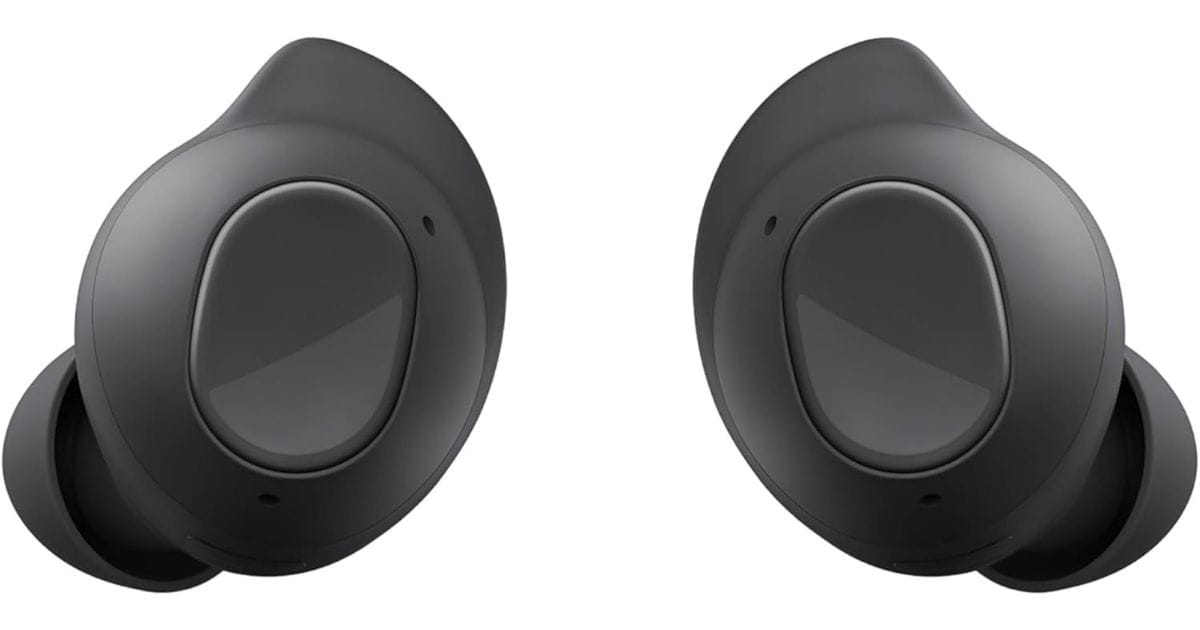
1. Samsung Galaxy Buds FE — best overall
Active noise cancelling earbuds with a wing-tip fit, one-tap Galaxy pairing and Auto Switch between Samsung devices. One-year limited warranty.
The Galaxy Buds FE are the most sensible default for an Android phone. Samsung gives them active noise cancellation and a wing-tip shape that holds in the ear without being jammed in, and the conveniences that make earbuds pleasant day to day — opening the case to pair, and Auto Switch moving the audio between your phone and tablet — work through your Samsung account.
The caveat is that the most-advertised features are Galaxy features. Live Translate and the Interpreter mode run through Samsung’s own phone apps, so on a Pixel or a OnePlus you get a good ANC earbud and lose the headline trick. Samsung lists a one-year limited warranty.
- Active noise cancellation at a mid-tier price
- Wing-tip shape holds without heavy pressure
- Auto Switch and one-tap pairing across Samsung devices
- Translation and Auto Switch need a Galaxy phone
- One-year warranty, against two on the Pro
- Samsung does not headline a water-resistance rating here
2. Soundcore Liberty 4 NC — best on a non-Samsung Android phone
Adaptive ANC with LDAC hi-res audio and 11mm drivers. Soundcore rates 8 hours with noise cancelling on, or 40 hours using the charging case.
If your phone is a Pixel, a OnePlus or a Motorola, this is the pair that answers the caveat running through the rest of this guide. Nothing here depends on a Samsung account: Soundcore’s adaptive ANC, the HearID hearing profile and the 22 EQ presets all run from its own app on any Android handset, and LDAC support means hi-res streaming works on Android specifically rather than being an Apple-first feature.
Soundcore rates it at 10 hours a charge with noise cancelling off and 8 with it on, which becomes 50 and 40 hours using the case. The 98.5% noise-reduction figure in the listing is the manufacturer’s own, measured in its own conditions — treat it as a claim rather than a number you can verify. At $79.99 it sits a few dollars above the Galaxy Buds FE, which makes the choice between them almost entirely about which phone you own.
- Full feature set on any Android phone, not just Samsung
- LDAC hi-res streaming and 11mm drivers
- Adaptive ANC, HearID profiling and 22 EQ presets
- 8 hours with ANC on, 40 with the case by Soundcore’s figures
- The 98.5% noise-reduction claim is the manufacturer’s own
- No ecosystem tricks to match Samsung Auto Switch on a Galaxy phone
- Requires the Soundcore app to get the most from it
3. TAGRY X08 — longest battery for the money
Six hours a bud and a stated 60 hours with the 470mAh case. IPX5 rated, wireless or USB-C charging, with an LED charge readout.
If the thing that annoys you about earbuds is charging them, this is the answer at $35.99. TAGRY rates each bud at six hours and the 470mAh case at four further full charges, which is where the 60-hour headline comes from. The case has an LED readout for its own charge and the buds’, so you are not guessing.
It is IPX5 rated for sweat and rain, charges by USB-C or wirelessly, and reconnects as soon as you open the case. What you give up is tuning: there is no companion app worth the name and no noise cancelling, so this is a volume-and-convenience pick rather than a listening one.
- Six hours a bud and a stated 60 hours with the case
- IPX5 rating for sweat and rain
- Wireless or USB-C charging, with an LED charge readout
- No active noise cancellation
- No meaningful app or EQ control
- Sound is serviceable rather than refined
4. Samsung Galaxy Buds 3 Pro — best premium
Adaptive noise cancelling and an adaptive equaliser, with Galaxy AI translation features on a Samsung phone. Two-year limited warranty on this listing.
The Buds 3 Pro are what you buy when the Buds FE are not quite enough. The noise cancellation is adaptive rather than fixed, adjusting to what is going on around you, and the equaliser adapts with it. Samsung also includes a two-year limited warranty on the Amazon listing, double the FE’s.
They are the clearest case of Samsung-first design on this list. Real-Time Interpreter and the call-translation features run on Galaxy AI through a Galaxy phone. Paired with another Android handset they remain very good earbuds, but you are paying premium money for a feature set you will only half-use.
- Adaptive noise cancellation and adaptive EQ
- Two-year limited warranty on this listing
- The most polished option here for Galaxy owners
- Roughly double the price of the Buds FE
- The AI features are tied to Galaxy phones
- More earbud than casual listeners need
5. JLab Go Air Pop+ — cheapest pair worth owning
JLab lists 9+ hours a charge. Bluetooth 5.1 with auto-connect, three ear-tip sizes, plus app EQ presets and a Be Aware ambient mode.
At $19.99 these are the pair to buy when earbuds are a backup rather than a purchase. They are JLab’s smallest — the brand claims 15% smaller and 40% lighter than the older Go Air — the case slips into a pocket, and they turn on and connect the moment you take them out over Bluetooth 5.1.
They are better specified than $20 usually buys. JLab lists 9+ hours a charge, ships three ear-tip sizes, and the app adds EQ presets and a Be Aware mode that lets ambient sound through. There is no noise cancelling and the sound is honest rather than impressive, which at this price is the right trade.
- Under $20
- 9+ hours a charge by JLab’s figures
- App EQ presets, Be Aware mode and three tip sizes
- No active noise cancellation
- Sound is basic next to anything above $70
- Small case is easy to lose
6. SHOKZ OpenFit 2 — best for running and the gym
Open-ear earhooks at 9.4g a side, IP55 rated, with physical buttons. Shokz rates 11 hours a charge and 48 with the case.
These do not go in your ear at all. The OpenFit 2 sit on an earhook with a Ni-Ti alloy core, weigh 9.4g a side, and leave the ear canal open, so you hear the road, the turn signal, and whoever is talking to you. For running outdoors that is a safety feature, not a compromise.
Shokz rates them at 11 hours a charge and 48 with the case, with a ten-minute top-up giving a further two hours. They are IP55 rated, use physical buttons rather than touch panels — far easier with sweaty hands — and pair with two devices at once. The trade is obvious: an open design cannot isolate, so on a loud train you will be turning them up.
- Open-ear design keeps you aware of traffic and surroundings
- 11 hours a charge, 48 with the case, 10-minute quick charge
- IP55 rated, 9.4g, and physical buttons that work when sweaty
- No isolation, so poor on loud commutes
- The most expensive pair here
- Bass is limited by the open design
What to Check Before You Buy
Decide whether you want to block the world out or stay aware of it. That single choice separates the SHOKZ from everything else here, and it matters more than any specification. Among the best earbuds for Android, noise-cancelling in-ear pairs suit commutes and offices, while an open-ear design suits running outdoors and anyone who finds sealed tips uncomfortable.
Treat battery claims as ceilings. Every figure on this page is the manufacturer’s, measured at moderate volume with the extras off. Noise cancelling, calls and loud listening all pull them down, and the case total only helps if you remember to put the buds back.
Check what stops working on a non-Samsung phone. Both Galaxy pairs lead with translation and Auto Switch, and both route those through Samsung’s apps. On a Pixel, Motorola or OnePlus handset you keep the audio and lose the headline. If that is the reason you were buying, confirm it against your exact phone first.
Match the water rating to the sweat, not the weather. IPX5 and IP55 cover sweat and rain; neither is a swimming rating. If you train hard, this matters more than codec support.
- Fit first. Try the tip sizes in the box. A poor seal costs more bass than any amount of specification does.
- Controls you can use. Physical buttons beat touch panels with wet or gloved hands.
- Multipoint if you move between a phone and a laptop all day.
- Case charging. Wireless charging is a small luxury that stops being one once you have it.
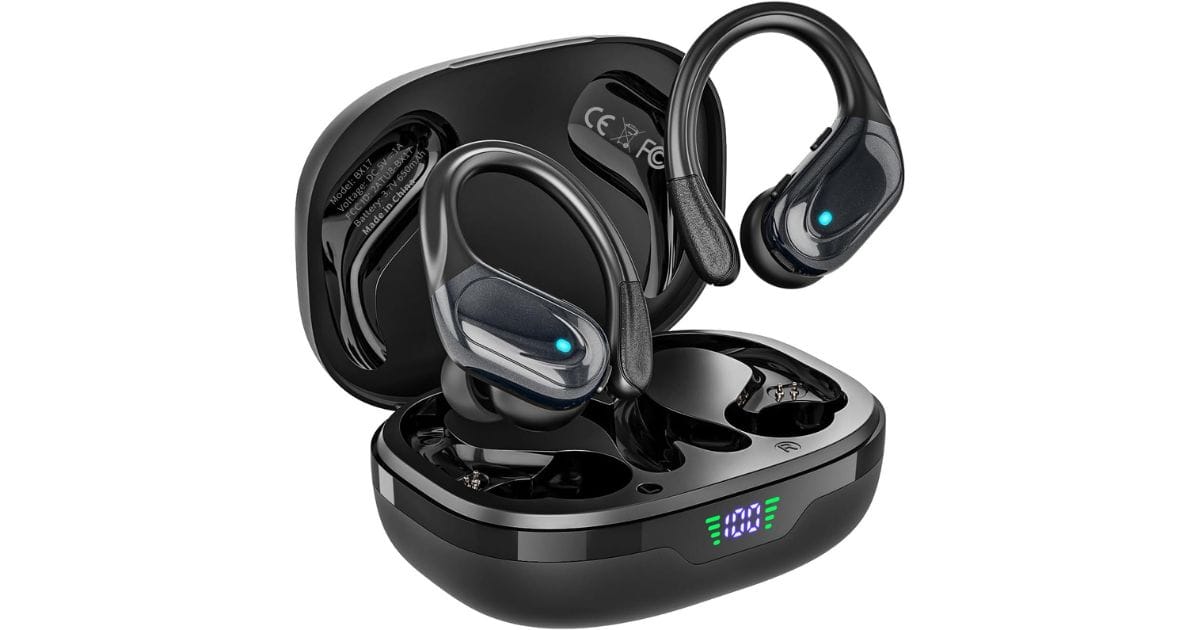
If long-session comfort is the priority, our sleep earbuds guide covers lower-pressure designs, and if you would rather skip charging altogether our wired earbuds guide is the alternative.
When None of These Are the Right Buy
Three situations send you somewhere other than this list. The first is flying often. None of these six is a noise-cancelling over-ear headphone, and on a long-haul flight a pair of over-ears will beat any in-ear pair here for both isolation and comfort over six hours. The ANC on the Galaxy Buds FE and the Liberty 4 NC is good for a train or an office; it is not the same class of quiet.
The second is swimming. IPX5 and IP55 cover sweat and rain, and nothing on this page is rated for submersion. If you want to track laps you need a dedicated waterproof player or a watch with onboard storage, because Bluetooth barely travels through water in the first place.
The third is charging fatigue in a broader sense. If what you actually want is to put something in your ears and never think about battery again, a wired pair solves the problem permanently for a fraction of the money — our wired earbuds guide covers the options, and a USB-C adapter handles phones without a headphone jack.
It is also worth saying plainly that the gap between a $20 pair and an $80 pair is far larger than the gap between an $80 pair and a $180 pair. If you are upgrading from the earbuds that came free with a phone, the Galaxy Buds FE or the Liberty 4 NC will feel like a transformation. Going from either of those to the Buds 3 Pro or the OpenFit 2 buys you a specific capability — adaptive ANC, or an open design — rather than a general improvement.
Bluetooth Codecs: the Android-only advantage
A codec is simply how audio is compressed before it crosses the Bluetooth link, and it is one of the few areas where Android owners have an option iPhone owners do not. Every pair here supports SBC, the universal fallback, and most support AAC. The one worth knowing about is LDAC, which Sony developed and which ships as part of Android itself — Soundcore lists it on the Liberty 4 NC, and it carries substantially more data than SBC.
Whether you can hear the difference is a separate question from whether the specification exists. It needs a quiet environment, a good seal and source material that was not already heavily compressed. Streaming a standard-quality playlist on a bus, almost nobody could pick LDAC from AAC in a blind test. Working through a lossless library at a desk, some people can.
The practical advice: treat codec support as a tie-breaker between two pairs you already like, not a reason to buy. Both ends have to support it, Android will fall back to SBC when the connection is congested, and higher-bitrate codecs cost battery. If you do want it, check that your phone lists the codec in its developer options rather than assuming the earbuds alone are enough.
- SBC — universal, always works, lowest quality ceiling.
- AAC — widely supported and efficient; the usual default on both platforms.
- LDAC — built into Android, carries the most data, and needs both phone and earbuds to support it.
Frequently Asked Questions
Do Samsung Galaxy Buds work with non-Samsung Android phones?
Yes, for audio, calls and noise cancelling. What you lose is the Samsung-specific layer — Auto Switch between Galaxy devices, Live Translate and the Interpreter features all run through Samsung apps on a Galaxy phone. Budget accordingly if those are your reason for buying.
Which of these has the longest battery life?
By the manufacturers’ own figures, the TAGRY X08: six hours a bud and roughly 60 hours in total using the case. The SHOKZ OpenFit 2 claims the longest single charge at 11 hours, with 48 hours including the case.
Are open-ear earbuds worth it for running?
They are if awareness matters. Leaving the ear canal open means you hear traffic and other people, which is why runners and cyclists choose them. The trade is that they cannot isolate, so they are a poor choice for trains, planes and noisy offices.
Do any of these support wireless charging?
The TAGRY X08 case does, alongside USB-C. The others on this list charge over USB-C.
Is it worth paying for noise cancelling on earbuds this price?
It depends where you listen. On a commute or in an open-plan office, ANC is the feature you will notice every day, and the Galaxy Buds FE are the cheapest pair here that has it. For a quiet house or a gym, the money is better spent on fit and battery.
What does IPX5 or IP55 actually protect against?
Both cover sweat and rain — water sprayed from any direction. Neither is a swimming or submersion rating, and neither is permanent: seals degrade with age, heat and soap.
Which Should You Buy?
For most people on an Android phone, the Galaxy Buds FE are the right first choice: noise cancelling, a fit that holds, and the pairing conveniences that make earbuds worth using, at a price well under the premium tier.
If your phone is not a Samsung, buy the Soundcore Liberty 4 NC instead — it costs about the same and none of its features depend on a Galaxy account. Beyond those two: the TAGRY X08 if charging is what you hate, the JLab Go Air Pop+ for a spare pair under $20, the Galaxy Buds 3 Pro if you own a Galaxy phone and want the best version of this, and the SHOKZ OpenFit 2 if you run outdoors and need to hear what is coming.
If you are weighing these against the brands that advertise heavily, our Raycon earbuds guide and our Raycon versus AirPods comparison cover how those stack up, and our Miniso translation earbuds review looks at the niche translation models.