Garmin is the better choice for most runners, cyclists, multisport athletes, and buyers who want detailed training guidance. Fitbit is usually better for shoppers who want a slimmer, simpler tracker for steps, sleep, heart rate trends, and everyday wellness. Neither brand wins every category. The right answer depends on whether you want a training watch or an approachable health tracker.
This Garmin vs Fitbit comparison focuses on the differences that shape everyday ownership. These include fitness tracking, sleep and recovery insights, GPS, battery life, subscriptions, app design, phone compatibility, and comfort. We also explain which current device is the best starting point for each ecosystem.
Garmin vs Fitbit: Quick Verdict
- Choose Garmin for structured training, outdoor sports, longer GPS sessions, physical controls, navigation options, and data that can grow with your goals.
- Choose Fitbit for a lighter band, straightforward daily goals, easy-to-read wellness trends, comfortable sleep tracking, and a lower initial price.
- Choose neither automatically if phone apps, calling, messaging, or third-party smartwatch apps matter more than fitness. A Wear OS or Apple Watch comparison may be more relevant.
Garmin vs Fitbit at a Glance
| Decision factor | Garmin | Fitbit |
|---|---|---|
| Best overall for | Training and outdoor fitness | Simple health and activity tracking |
| Workout depth | Broader sport profiles and training metrics | Clear basics for casual exercise |
| Sleep and wellness | Detailed data tied to recovery and training | Approachable summaries and trends |
| GPS and navigation | Stronger range, especially in sport-focused models | Built-in GPS on select trackers such as Charge 6 |
| Battery approach | Often measured in many days; varies widely by model and GPS use | Generally several days on current trackers |
| Subscription | Core Garmin Connect features work without a required plan; Connect+ is optional | Core tracking works without Premium, but some coaching and deeper insights may require it |
| On-device controls | More buttons, screens, and workout interaction on many watches | Simpler interface with more reliance on the companion app |
| Typical price range | Broad, from entry running watches to premium adventure models | Usually lower for slim trackers |
How we chose: This is a research-based comparison using current manufacturer documentation, product specifications, ecosystem features, and current merchant listings. It focuses on the differences that materially affect a buying decision and does not claim hands-on testing. Prices, availability, subscription names, and included features can change.
The Two Best Starting Points
A brand comparison becomes misleading when an expensive adventure watch is matched against a basic band. These two fitness trackers are useful starting points because each shows what its ecosystem does well without forcing a long product list.
They are starting points, not the only current choices. Garmin’s range extends from accessible running and lifestyle watches to specialist outdoor and multisport models. Google’s current wearable catalog still includes Fitbit-branded trackers such as Charge 6 and Inspire 3 alongside the newer screenless Fitbit Air, while Pixel Watch serves buyers who want a fuller smartwatch experience. Compare within the product category that matches your needs rather than treating every Garmin and Fitbit device as equivalent.
Garmin Venu 3S: Best Garmin Starting Point for Everyday Fitness
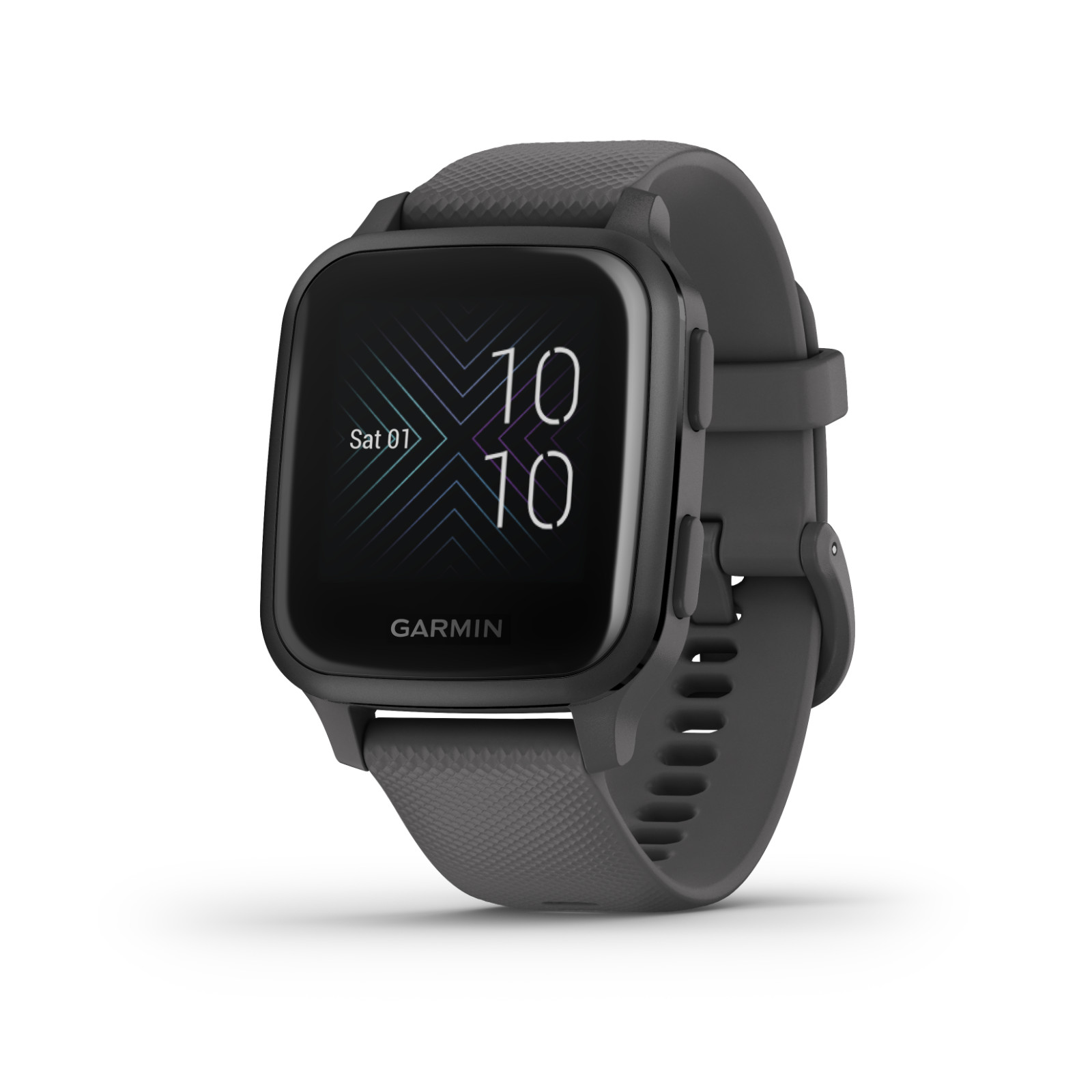
The Garmin Venu 3S suits buyers who want Garmin’s health and workout platform in a smaller 41 mm watch. It combines an AMOLED touchscreen with buttons, built-in GPS, music storage, Garmin Pay, a speaker and microphone, sleep coaching, and broad sport support. Garmin rates this configuration for up to 10 days in smartwatch mode, although an always-on display, GPS workouts, music, calls, and sensor use reduce that estimate.
Buy it if: you want a polished daily watch that still provides more workout detail than a typical slim tracker.
Skip it if: you only need steps, sleep, and basic activity summaries, or you want full mapping and the deepest running metrics available in Garmin’s sport-specific lines.

Fitbit Charge 6: Best Fitbit Starting Point for Most Buyers
The Fitbit Charge 6 is the stronger fit for people who prefer a narrow band and a simpler daily routine. It includes built-in GPS, heart-rate tracking, sleep tracking, exercise modes, Google Wallet, Google Maps directions, and phone notifications. Its small display is useful for glanceable information, but it is not designed to present training data as extensively as a larger Garmin watch.
Buy it if: comfort, sleep wearability, everyday activity goals, and a lower price matter most.
Skip it if: you want physical-button control during difficult workouts, long outdoor navigation, advanced training load analysis, or a large screen for reviewing data.

Training, GPS, and Outdoor Use
Garmin’s clearest advantage is how compatible watches connect each workout to a larger training picture. Depending on the model, you may get recovery time, training status, load, suggested workouts, race tools, running dynamics, cycling power, multisport modes, and support for external Bluetooth or ANT+ sensors.
Garmin’s Training Readiness documentation says a readiness score can combine sleep, recovery time, HRV status, acute load, and recent stress history. This applies only to compatible watches. A feature found on a premium Forerunner or fēnix may not be available on every Venu, vívoactive, or entry model.
Fitbit covers common workouts, heart-rate zones, Active Zone Minutes, activity duration, and daily movement without requiring the reader to learn a large training vocabulary. Charge 6 also has built-in GPS, which is sufficient for recording many walks and casual runs without using a phone’s GPS.
Garmin offers the broader navigation range. Entry watches record routes, while selected running and outdoor models add multi-band positioning, course guidance, maps, altitude tools, and longer GPS modes. GPS, music, and advanced satellite modes use much more power than normal smartwatch use. Outdoor buyers should therefore compare the activity-mode estimate for the exact model.
What the extra Garmin cost buys: more training context, a wider choice of sport-specific hardware, stronger navigation options, and more control during demanding workouts. Fitbit gives up some of that depth in exchange for a simpler experience and a lower-cost, less conspicuous device.
For a beginner who mainly walks, visits the gym, or wants motivation to move, Fitbit’s simpler summaries may be more useful than metrics that go unread. Garmin becomes the stronger value when training is structured, outdoor sessions are longer, or future goals are likely to require routes, sensors, recovery guidance, or sport-specific data.

Health, Sleep, and Recovery
Both ecosystems can track heart rate, sleep duration and stages, breathing rate, stress trends, and blood-oxygen information on supported devices. Selected models add ECG or skin-temperature trends. Availability depends on the device, country, age, account, software version, and regulatory status. Check the exact product page before buying for one health feature.
Fitbit’s advantage is approachable presentation and the comfort of a slim tracker during sleep. Garmin links sleep more directly to recovery and training decisions through features such as Body Battery, which Garmin describes as an estimate informed by signals including heart-rate variability, stress, sleep, and activity.
The better tracker is the one you can wear consistently. A heavier watch left on the charger overnight collects no sleep data, while a comfortable band may capture a more representative routine. Treat wrist data as trend information rather than a diagnosis or substitute for medical equipment; our guide to whether a smartwatch can measure blood pressure explains why wellness labels and medical capabilities are not interchangeable.

Battery, Apps, Subscriptions, and Compatibility
Both brands generally outlast app-first smartwatches, but battery comparisons must be model-specific. Fitbit trackers commonly run for several days, while Garmin ranges from compact AMOLED watches to outdoor models that can last much longer under restricted use. Always-on displays, GPS, music, calls, Pulse Ox, screen brightness, cold weather, and frequent notifications reduce real-world runtime.
Garmin Connect provides detailed health trends, workout history, courses, challenges, training plans, and third-party connections. Core features included with a compatible Garmin device remain usable without Garmin Connect+, while the optional paid plan adds selected premium insights and services; availability still varies by device.
Google now presents the former Fitbit app experience as Google Health and offers a Google Health Premium tier. Charge 6 remains listed alongside other Fitbit-branded trackers. Its core tracking works without a paid plan, but coaching and enhanced insights may require the current subscription. Check today’s plan terms instead of relying on old Fitbit Premium feature lists.
Current Garmin and Fitbit devices generally support compatible Android phones and iPhones. Each model still has minimum operating-system requirements. Fitbit setup uses a Google Account, and notification or reply options differ by phone platform. Check your phone version before buying if messaging or accessibility support is essential.
Selected Garmin watches support music downloads, contactless payments, voice-assistant access through a paired phone, and wrist calls. Charge 6 supports Google Wallet, phone notifications, and Google Maps directions that begin from a connected phone, but its narrow display is not a substitute for a full app-focused smartwatch.
- Lowest upfront cost: Fitbit usually offers the more affordable starting point.
- Fewest compromises for serious training: Garmin’s higher price is easier to justify when you will use its sport, sensor, and navigation tools.
- Recurring costs: Both ecosystems offer optional premium services, so compare the current free and paid features rather than relying on old “free versus subscription” summaries.
- Phone dependence: Both representative products need a compatible phone for setup, synchronization, and some connected functions.

If apps, rich replies, calling, and phone independence are your priority, read what a smartwatch actually does before committing to either platform. Our guide to whether a smartwatch needs a data plan also explains the difference between Bluetooth, Wi-Fi, and cellular models. Neither the Venu 3S nor Charge 6 should be bought as a fully independent LTE watch.
Which Brand Is Better for You?
Garmin is easier to operate during demanding workouts because many models combine a touchscreen with physical buttons and a larger display. Fitbit is lighter, lower-profile, and often easier to wear overnight or alongside a traditional watch. If discreet wear matters, see our guide to wearing a Fitbit and a watch together.
Choose Garmin if you:
- Train for races or want structured workout guidance.
- Need stronger GPS, navigation, or external-sensor support.
- Prefer buttons and more data on the watch itself.
- Want health, sleep, and recovery information connected to training.
- Need a product range that can extend into hiking, triathlon, golf, cycling, diving, or other specialized sports.
- Structured training guidance and broader sport profiles
- Stronger GPS, navigation and external-sensor support
- Physical buttons and more data readable on the watch itself
- Core Garmin Connect features work without a required subscription
- Usually costs more than a comparable Fitbit tracker
- More watch than someone tracking steps and sleep needs
- Larger cases are less comfortable to sleep in
Choose Fitbit if you:
- Primarily care about steps, sleep, heart-rate trends, and active minutes.
- Want a light, unobtrusive tracker for day and night.
- Prefer concise app summaries over a deep training dashboard.
- Want to spend less than many full-size Garmin watches cost.
- Value Google Wallet or Maps guidance in a slim tracker such as Charge 6.
- Slim, light band that is comfortable to wear overnight
- Approachable summaries and easy-to-read wellness trends
- Lower starting price than most full-size Garmin watches
- Google Wallet and Maps guidance on the Charge 6
- Less training depth than Garmin
- More reliance on the companion app than on-device controls
- Some coaching and deeper insights may require Premium
Android users who want a more app-focused watch should also compare the best smartwatches for Android. Garmin and Fitbit are strongest when fitness and health tracking—not a miniature phone experience—is the main reason for buying.
Common Buying Mistakes
- Comparing brands instead of models: Garmin’s range is enormous, and Fitbit trackers are not equivalent to Pixel Watches.
- Assuming every insight is free: Check the current subscription terms for the specific features you expect to use.
- Buying for one sensor label: Device support, regulatory clearance, and regional availability can differ.
- Using smartwatch-mode battery claims for GPS planning: Compare the activity mode you will actually use.
Frequently Asked Questions
Is Garmin better than Fitbit?
Garmin is generally better for serious fitness, running, cycling, outdoor navigation, and detailed training feedback. Fitbit is often better for a slim, simple device focused on daily activity, sleep, and approachable wellness summaries.
Does Garmin require a monthly fee?
No subscription is required for the core Garmin Connect experience and standard features included with a compatible watch. Garmin Connect+ is optional and adds selected premium features; it does not make the basic device unusable without payment.
Can Fitbit work without a premium subscription?
Yes. A current Fitbit tracker can record core activity, heart rate, workouts, and sleep information without a paid premium plan. Google now markets premium coaching and enhanced insights through Google Health Premium, and the included features can change by device, account, country, and software version.
Which is better for sleep tracking?
Fitbit is appealing for sleep because its trackers are light and its summaries are easy to understand. Garmin is more useful when you want sleep information connected to training readiness, recovery, and Body Battery. Comfort and consistent overnight wear matter more than a small feature difference.
Which is better for running?
Garmin is the stronger running ecosystem. Its Forerunner and higher-end outdoor lines offer a broader selection of training metrics, workout guidance, race tools, sensor support, and navigation features. Fitbit is sufficient for casual pace, distance, and heart-rate tracking.
Is Fitbit being phased out?
Fitbit-branded trackers are still actively sold in Google’s current wearable lineup, including Charge 6, Inspire 3, and Fitbit Air. Google has moved the companion experience into Google Health, so app and subscription names are evolving even though Fitbit tracking hardware remains available.
Final Verdict
Garmin wins for buyers who want fitness depth: structured training guidance, stronger GPS and navigation, physical buttons that work mid-workout, and recovery data that connects back to training. The Venu 3S is the sensible starting point.
Fitbit remains the better fit for simplicity. The Charge 6 is light enough to wear overnight, presents wellness trends clearly, and costs less than most full-size Garmin watches. Neither brand wins every category — pick the one that matches how you will actually use it.
Garmin wins this comparison for buyers who want fitness depth and room to grow. Its wider hardware range, sport-specific metrics, GPS options, physical controls, and training ecosystem make it the safer long-term choice for active users. The Venu 3S is a balanced everyday entry point, while runners can move into the Forerunner line and outdoor users can choose an Instinct or fēnix.
Fitbit remains the better fit for simplicity. Charge 6 delivers the essentials in a lighter, less distracting shape and at a lower price than many full-size Garmin watches. Choose it when easy wellness tracking and sleep comfort matter more than advanced training analysis.