Quick Answer
Shilajit gummies are sold almost entirely on claims you cannot check, and only one of these six listings states how much shilajit is actually in a gummy. That single fact separates them more than price does. The 10-in-1 Alpha states 4000 mg, though across a ten-ingredient blend rather than shilajit alone. The rest state trace-mineral counts and fulvic acid percentages without a dose, so you are comparing pack size, added botanicals and sugar rather than potency.
Shilajit is a tar-like substance collected from rock in high-altitude regions and sold in the West mainly as a supplement. Gummies are the easiest format to buy, and also the hardest to compare: most listings advertise trace minerals and fulvic acid without disclosing how much shilajit each gummy actually contains.
This guide compares six shilajit gummies on the things a label can be checked against — how much shilajit is stated, whether sugar is added, what else is in the formula and how many gummies you get. It does not claim any of them will do anything for your energy, stamina or focus, because that is not something a product listing can establish.
Research updated October 11, 2026. Selections are based on merchant listings and published third-party testing, not on first-hand use. We have not tested these shilajit gummies ourselves.
Quick Picks
- Most gummies per pack: Pure Himalayan Shilajit Gummies — 90 count, individually wrapped.
- Highest stated fulvic acid: Better Alt Gold Grade — listing claims 75%+ fulvic acid.
- Most certifications listed: Be Bodywise Gold — no added sugar, non-GMO, plus ashwagandha and gokshura.
- Similar formula, lower price: Pure Himalayan with Ashwagandha — also no added sugar, same added botanicals.
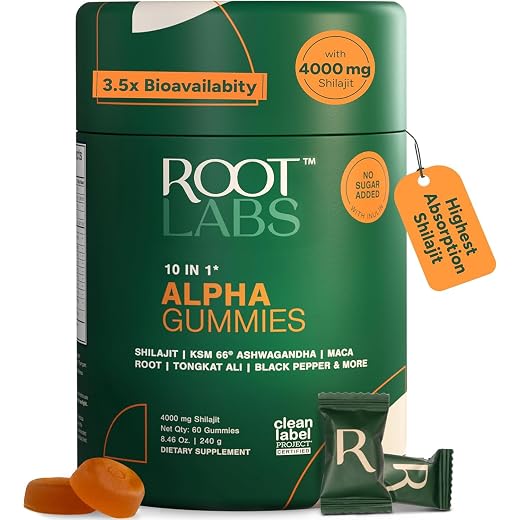
- Only one that states a shilajit amount: 10-in-1 Alpha — 4000 mg stated, with tongkat ali and maca root.


How the six shilajit gummies compare on label facts
Only what each listing actually states. Prices are deliberately not reproduced here — they change, and the live figures are in the comparison block above.
| Product | Count | Shilajit amount stated | Added sugar | Other botanicals |
|---|---|---|---|---|
| Pure Himalayan | 90 | Not stated | Not stated | None |
| Better Alt Gold Grade | 60 | Not stated (75%+ fulvic acid) | Not stated | None |
| Be Bodywise Gold | Not stated | Not stated | No added sugar | Ashwagandha, gokshura |
| Pure Himalayan with Ashwagandha | Not stated | Not stated | No added sugar | Ashwagandha, gokshura |
| 10-in-1 Alpha | Not stated | 4000 mg | Not stated | Tongkat ali, maca root |
| Sea Moss & Lion’s Mane | 60 | Not stated | Not stated | Sea moss, ashwagandha, lion’s mane |
What to check before buying shilajit gummies
Whether the shilajit amount is actually stated
This is the single biggest difference between these listings. Five of these six shilajit gummies advertise minerals and fulvic acid percentages but never say how much shilajit is in a gummy. Only the 10-in-1 Alpha listing gives a figure (4000 mg). A percentage of fulvic acid tells you about the extract’s composition, not the dose you are taking.
Whether it is shilajit alone or a blend
Four of these six add other botanicals — ashwagandha and gokshura in two of them, tongkat ali and maca root in the third. That is not automatically worse, but it means you are no longer evaluating one ingredient, and anything you react to becomes harder to isolate.
Added sugar
Gummies need a carrier. Two listings here explicitly state no added sugar; the others do not say either way. If you take one or two daily, that difference accumulates.
Third-party testing for heavy metals
This matters more for shilajit than for most supplements, for reasons covered in the next section. Look for a brand that publishes a certificate of analysis from an independent lab. Only one of these six advertises third-party testing in its title, and none advertises a published certificate of analysis — which is itself worth knowing.
Cost per gummy, not cost per jar
Pack sizes here range from 60 gummies upward, so sticker price and actual cost per serving diverge quickly. The live prices in the comparison above refresh automatically; work out the per-gummy figure from the current price and the count.
What is actually known, and what is not
Shilajit has a long history in Ayurvedic practice and a short, thin modern research record. Most of the energy, stamina and testosterone claims attached to it in marketing come from small studies, and none of these gummy products has been shown to produce those effects. Treat the claims on any shilajit gummies listing — including the six below — as marketing copy rather than established fact.
Two things are worth knowing before you buy shilajit gummies at all. First, dietary supplements are not reviewed or approved by the FDA for safety or effectiveness before they go on sale; a product can be marketed without demonstrating that it works. Second, shilajit is a mineral-rich resin, and independent laboratory testing has specifically examined shilajit supplements for both fulvic acid content and heavy metals — contamination is a recognised concern for shilajit gummies and resins alike, not a hypothetical one. ConsumerLab’s testing is a reasonable starting point if you want to see what that testing covers.
If you are pregnant, breastfeeding, taking prescription medication, or managing a health condition, talk to a doctor or pharmacist before starting shilajit. That is standard advice for any supplement and it applies here.
The six shilajit gummies compared
1. Pure Himalayan Shilajit Gummies — most gummies per pack
At 90 individually wrapped gummies, this is the largest count in the group and consistently the cheapest per gummy. The listing advertises “85+ trace minerals” and fulvic acid, and describes the product as natural and organic.
What it does not say is how much shilajit is in each gummy. The individual wrapping is a genuine practical difference if you carry them rather than keeping a jar at home.
- 90 gummies, the largest count here
- Individually wrapped for carrying
- Lowest cost per gummy in this group
- Shilajit only, no added botanicals
- No shilajit amount stated anywhere in the listing
- No third-party testing advertised
- “85+ trace minerals” is a composition claim, not a dose
2. Better Alt Gold Grade — highest stated fulvic acid
This listing makes the strongest composition claim of the six: 75%+ fulvic acid, described as “Gold Grade”, across 60 gummies. It is marketed for energy and immune support.
A high fulvic acid percentage describes the extract, not how much of it you get per gummy, so it is not directly comparable to the 4000 mg figure quoted by the Alpha product. “Gold Grade” is a marketing term with no standard definition behind it.
- Highest stated fulvic acid percentage in this group (75%+)
- Shilajit only, no added botanicals
- 60-count jar
- No shilajit amount stated per gummy
- “Gold Grade” is not a regulated or defined grading term
- Energy and immune claims are marketing, not demonstrated
- No third-party testing advertised
3. Be Bodywise Gold — most certifications listed
This is a blend rather than straight shilajit: ashwagandha and gokshura are included alongside fulvic acid and the same “85+ trace minerals” claim. The listing states no added sugar and non-GMO.
It is also the most expensive of the six. The added botanicals are the reason to choose it or avoid it — there is no neutral position on a blend.
- States no added sugar
- Non-GMO stated
- Most label claims disclosed of the six
- Highest price in this group
- Contains ashwagandha and gokshura, so not shilajit alone
- No shilajit amount stated
- Harder to attribute any reaction to a single ingredient
4. Pure Himalayan with Ashwagandha — similar formula, lower price
This is close to the Be Bodywise formula on paper: ashwagandha, gokshura, fulvic acid, 85 micronutrients and no added sugar — at a noticeably lower price.
Worth flagging an error we found in the previous version of this guide: this product was described as a simple, single-source formula “without stimulants”. Its own listing says it contains ashwagandha and gokshura. If the two blends are otherwise comparable to you, price is the clearest differentiator.
- States no added sugar
- Same added botanicals as the premium option at a lower price
- 85 micronutrients claimed
- No shilajit amount stated
- Contains added botanicals despite being marketed as pure
- No third-party testing advertised
- Listing detail is thinner than the Be Bodywise equivalent
5. 10-in-1 Alpha — the only one that states a shilajit amount
This is the product most people searching for shilajit gummies are actually looking for by name, and it is the only listing here that puts a number on the shilajit: 4000 mg. It adds tongkat ali and maca root, and refers to a proprietary “ShilAbsorb” absorption technology.
A stated milligram figure is genuinely more useful than a percentage claim, but note it is a stated amount on a listing, not an independently verified one, and “ShilAbsorb” is a brand term rather than a tested mechanism. The “10-in-1” framing refers to the number of ingredients, not to ten demonstrated effects.
- Only product here that states a shilajit amount (4000 mg)
- Most transparent listing on quantity
- Includes tongkat ali and maca root if you want them
- “ShilAbsorb” is a proprietary brand term, not a verified mechanism
- “10-in-1” counts ingredients, not benefits
- Stated amount is not independently confirmed
- Most ingredients of the six, so hardest to isolate a reaction
The column that stands out is the third one. Five of six shilajit gummies never tell you how much of the active ingredient you are buying.
6. Shilajit Gummies with Sea Moss & Lion’s Mane — the cheapest, and the least shilajit-led
This is the furthest of the six from shilajit on its own. Sea moss, ashwagandha and lion’s mane sit alongside it, and as with the other blends here the listing gives no figure for how much of any single ingredient a gummy contains. At the lowest price in the group, that is worth weighing: you are paying less, but for a product whose shilajit content is the least knowable.
One thing does set it apart. It is the only listing in this group that states third-party testing rather than simply asserting purity — which, given what independent testing has found in this category, is the more meaningful claim of the two. A stated test is still not a published certificate, so ask the seller for one before relying on it.
- Lowest price of the six
- States third-party testing, which most here do not
- 60 gummies, vegan and non-GMO stated
- Shilajit content is not stated, as with the other blends
- Three added botanicals make it hard to attribute any effect
- Testing is claimed on the listing, not published
Frequently Asked Questions
How much shilajit is in these shilajit gummies?
Most shilajit gummies listings do not say. Of the six here, only the 10-in-1 Alpha states a milligram figure (4000 mg), and that covers its whole ten-ingredient blend rather than shilajit on its own. Treat a missing dose as a reason to compare carefully, not as evidence of a low one.
What does the fulvic acid percentage mean?
It describes the share of fulvic acid in the shilajit extract, not the amount you receive. A listing stating 75%+ fulvic acid tells you nothing useful unless it also states how much extract is in a gummy. Only one listing here gives a percentage at all.
Are shilajit gummies tested for heavy metals?
Several listings here state that they are free of heavy metals, but a claim on a listing is not a published certificate. Independent testing has found contamination in some shilajit products, which is why the Sources section below links to that testing rather than relying on label claims.
Is a blend better than plain shilajit?
It is a different product, not a better one. Four of these six add ashwagandha, gokshura, maca, tongkat ali, sea moss or lion’s mane. If you want to know what shilajit alone does for you, a blend makes that impossible to judge.
Should I take shilajit at all?
That is a question for a doctor or pharmacist, particularly if you take other medication or have a health condition. This guide compares what the labels disclose; it does not assess whether the supplement is appropriate for you.
Final verdict
If disclosure is what you care about, the 10-in-1 Alpha is the only listing here that commits to a shilajit figure, and that makes it the easiest of the six to evaluate — with the caveat that a stated amount is still just a claim on a listing. If cost per gummy matters more, the 90-count Pure Himalayan is the cheapest per serving and keeps the formula to one ingredient.
The two ashwagandha blends are close enough on paper that price is the sensible tiebreaker. And the honest conclusion across all six: only one advertises independent third-party testing, and none publishes a certificate, which in a category with a documented heavy-metal concern is the gap worth closing before you commit to taking something daily.
The only one of the six that states how much shilajit is in the product (4000 mg), which makes it the easiest to assess on its own terms. Choose the 90-count Pure Himalayan instead if cost per gummy matters more and you want shilajit on its own.
Only one of these six advertises third-party heavy-metal testing, and none publishes a certificate. If you intend to take shilajit daily, that is the thing worth asking the brand about before you buy.
Sources and further reading
- ConsumerLab — independent testing of shilajit supplements for fulvic acid and heavy metals
- FDA — dietary supplements overview, including what is and is not reviewed before sale
- Product specifications in this guide are taken from the current merchant listings linked above and were checked on 11 October 2026.
Looking at other supplement categories? See our guides to magnesium supplements and vitamin D3 and K2, or browse the vitamins and supplements hub.